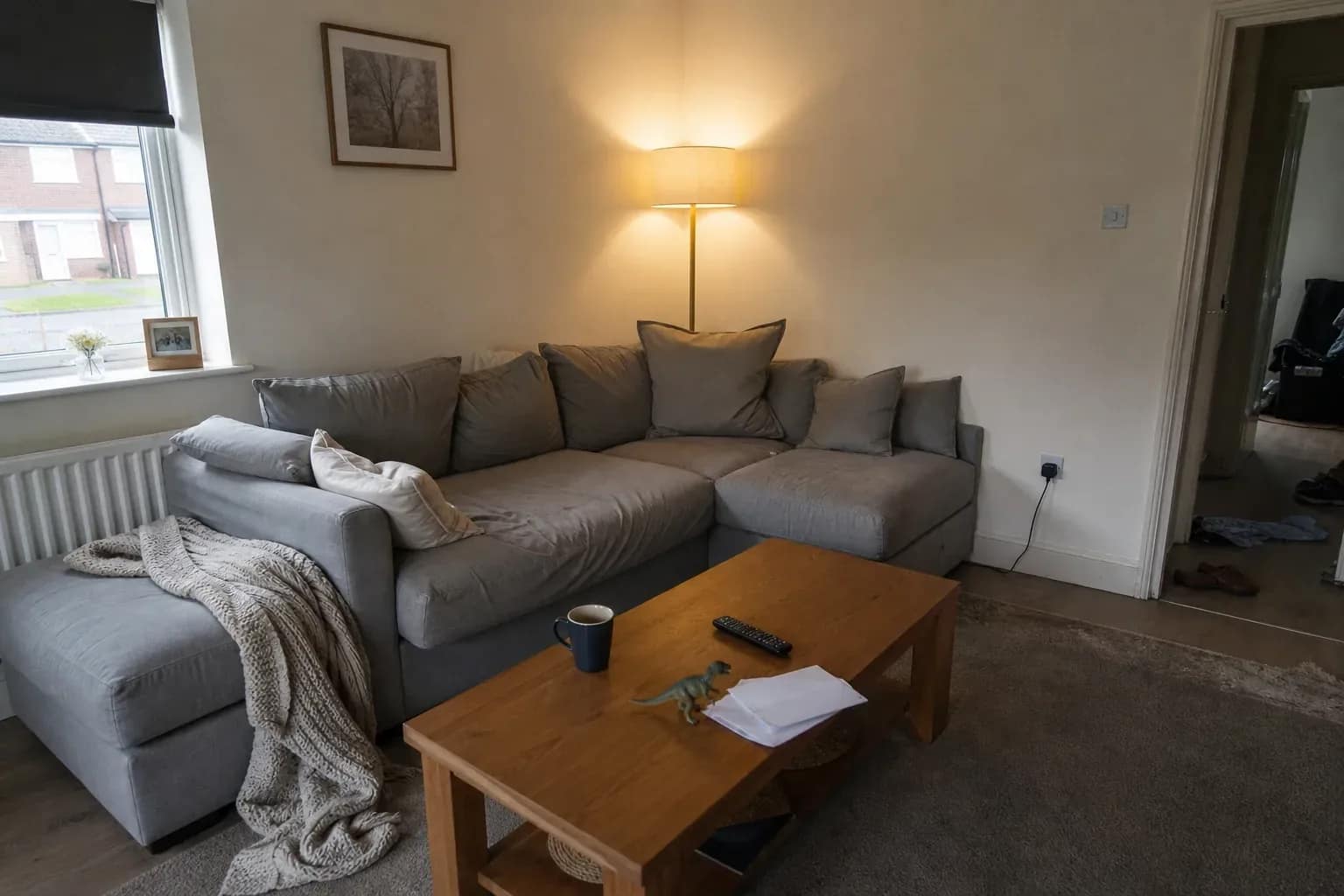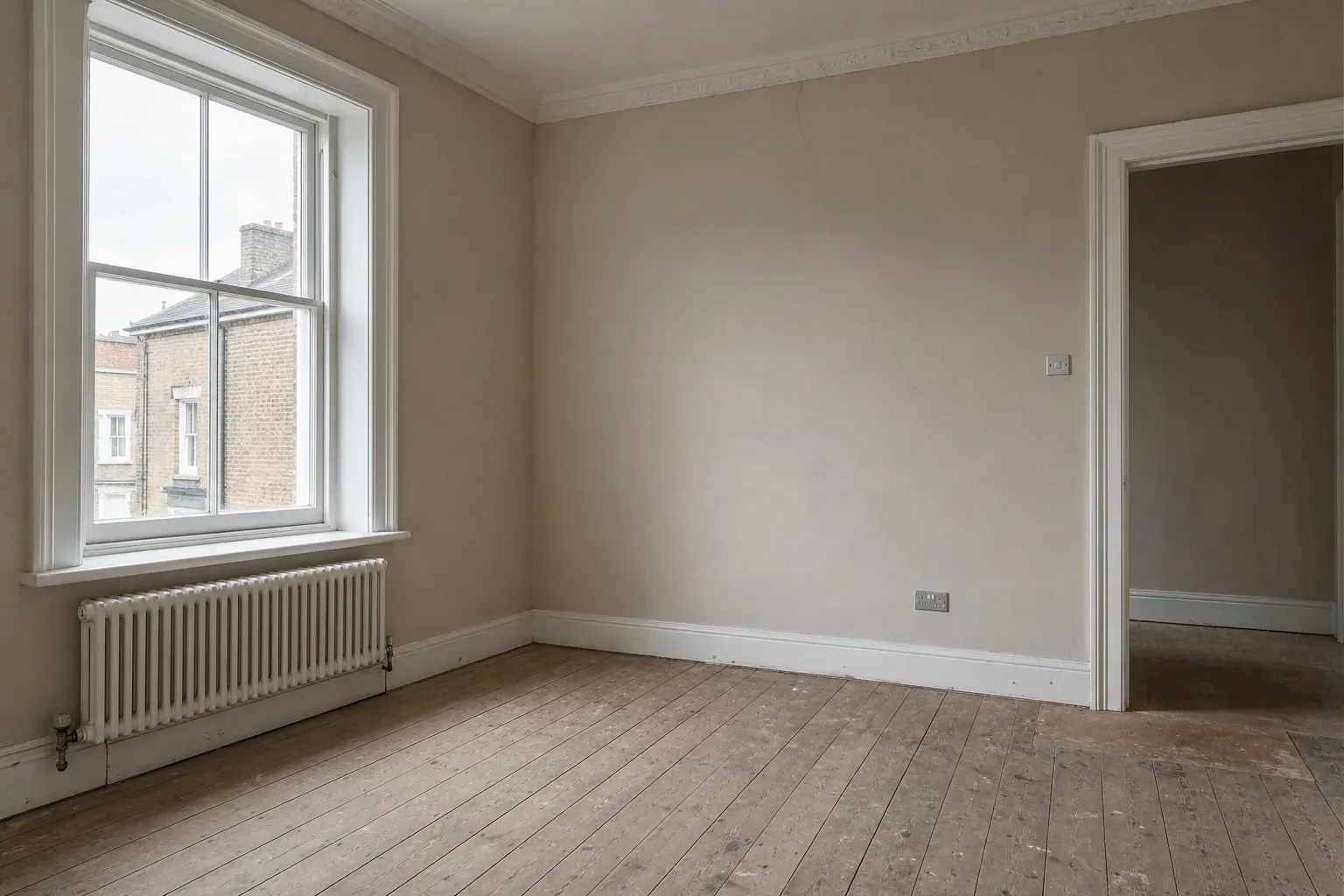
Roughly 11% of primary listing photos across the four major portals show signs of alteration, and more than 90% of those carry no visible disclosure (Real Estate News, June 2026). That gap is what a new California statute, several MLS fine schedules and a New York consumer alert are all aimed at. Here is what you may change in a listing photo, what you may never change, and exactly where the disclosure has to sit.
What counts as a digitally altered listing photo
Most arguments about MLS virtual staging rules are really definition arguments, so start there. CRMLS, the California Regional MLS, defines a digitally altered image as one changed "using digital editing tools or artificial intelligence to add, remove, replace, or modify visual design elements such as furniture, appliances or decor" (CRMLS knowledge base). Method is irrelevant. A hand-composited Photoshop job and a one-click AI render land in the same bucket, and so does an edit made by a service that markets itself as enhancement rather than staging.
California's statute is more specific about scope. AB 723 adds section 10140.8 to the Business and Professions Code, covering images altered by software or artificial intelligence to add, remove or change elements, then names them: fixtures, furniture, appliances, flooring, walls, paint, landscaping, facade, floor plans, and externally visible elements including neighbouring properties (statutory text via LegiScan). Note that last clause. Tidy up the neighbour's garage roof visible over the fence and you are inside the definition.
The same statute exempts ordinary processing, so long as it does not alter how the property is represented:
- Lighting, exposure and white balance
- Colour correction and sharpening
- Angle, straightening and cropping
- Other common photo editing adjustments of the same kind
Read that list as a boundary rather than a licence. Processing the photograph is exempt; editing the property is not, and the exemption turns on whether the representation of the property changed, not on how much work the edit took. Kevin Greene, a data-solutions GM quoted by Slate, described the slide between the two: "Tools that can brighten a photo can also remove power lines, add trees" (Slate, October 2025). Same button, different side of the line. A sky replacement, a lawn greened past the season, a power line brushed out of an elevation shot: none of those are staging, and all of them are alterations.
The near-universal rule: add furniture, do not change the house
One prohibition repeats almost verbatim across every rulebook checked for this article. CRMLS states that members "CANNOT add, remove, or modify any real part of a property such as wall color, flooring, cabinets, wall dimensions, landscaping, etc." Stellar MLS says the same thing in its own photo rules: no swapped permanent fixtures, no paint changes.
Metro MLS in Wisconsin publishes the cleanest version of the list. Permitted: furniture, decor and accessories, rugs, artwork. Forbidden: adding people or pets, lifestyle scenes such as families dining or children playing, digitally inserted human figures, and signage (Metro MLS guidance). That last group catches anyone assuming a warmer, more lived-in render is a better one. On a listing it is not, and the people rule catches AI video too, where populating a room is often the default.
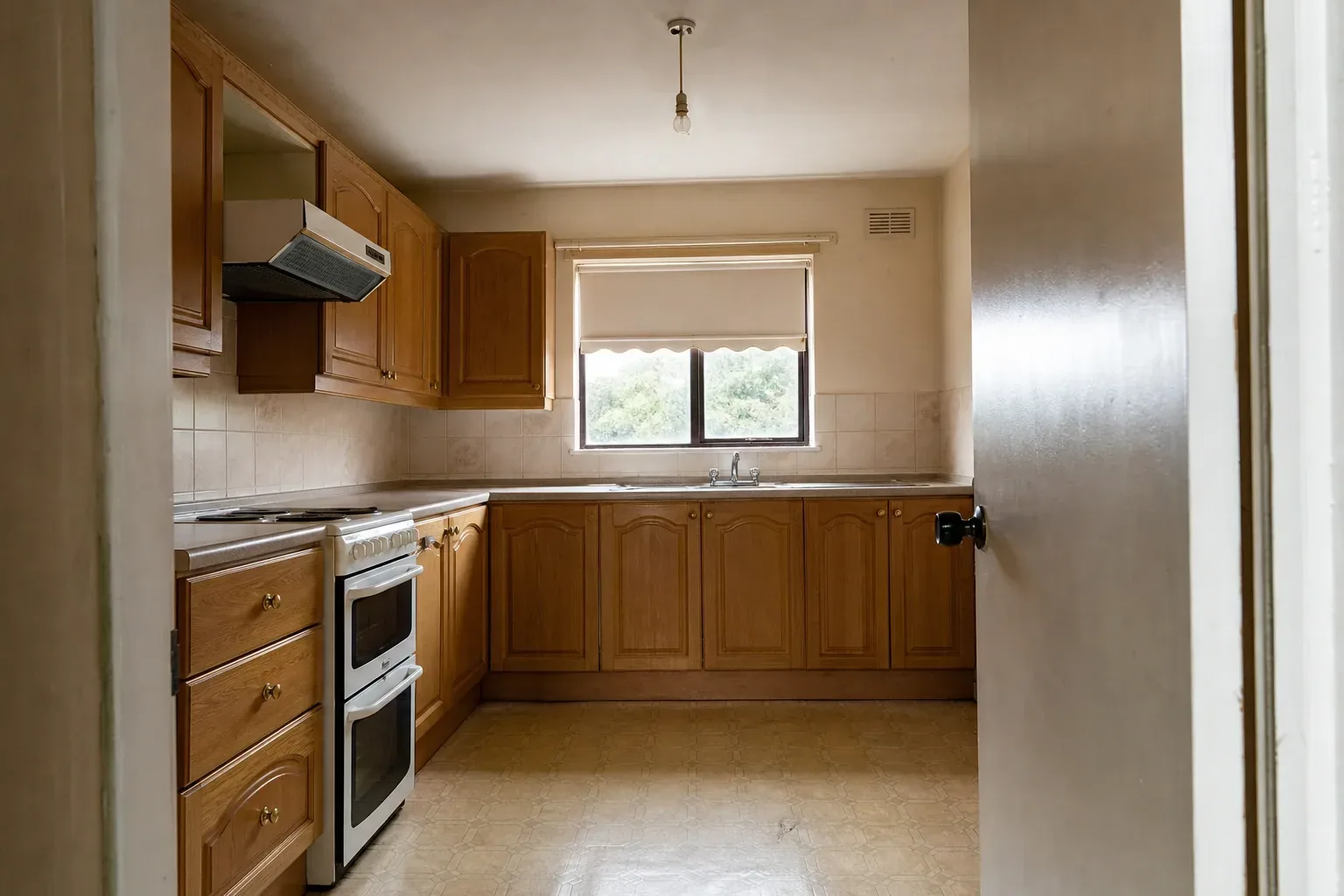
Permanent does not only mean walls and floors. A radiator, a wall heater, a soil stack, a support column, a step down into a sunken room, a window mullion, a utility meter: delete any of those to make a render look cleaner and you have altered a permanent feature. The test is not whether the thing is ugly or whether a buyer would miss it. The test is whether it is part of the property. This is where keeping the architecture untouched stops being an aesthetic concern and becomes a compliance one.
That line runs through most AI visualization tools, this one included. Furniture Cleanup sits in the MLS lane: object mode removes only what you paint over, full-empty mode clears a room in one pass, and neither applies a style. Interior Redesign does not sit there by default. Apply one of its style presets and the finishes can change with it, wall colour and flooring included, which is exactly what a listing photo may not do. It is a strong tool for a renovation pitch or a client presentation. Use it on a listing only after comparing the output against the original and confirming nothing permanent moved.
Jurisdiction by jurisdiction: where the disclosure goes
There is no single national rule. MLS virtual staging rules are written board by board, sitting on top of whatever your state requires, and the two do not always ask for the same thing in the same place. This is what the verified rulebooks and statutes require right now.
Verified requirements as of 6 August 2026. Check your own board before relying on any row.
| Jurisdiction | Where the disclosure goes | Teeth |
|---|---|---|
| California (AB 723) | A statement that the image was altered, plus a link, URL or QR code to the unaltered version, "reasonably conspicuous and located on or adjacent to the image" | Operative 1 Jan 2026. Enforced through existing Real Estate Law; misdemeanour exposure for wilful non-disclosure |
| CRMLS (California) | Label it "digitally enhanced", "digitally altered" or "virtually staged", and place the unaltered original immediately before or after it | Warning, then a $250 fine if uncorrected |
| Stellar MLS (Florida) | Photo description field, the virtually-staged field, and public remarks opening "One or more photo(s) was virtually staged." | Photos pulled from the service plus an automatic fine |
| Metro MLS (Wisconsin) | "Any virtual staging must be clearly disclosed so members and consumers know the images have been altered" | MLS enforcement now. Wisconsin 2025 Act 69 adds a statutory duty from 2027 |
| New York | No statute. Licensing advertising rules require "an honest and accurate depiction of the property" | Disciplinary exposure through licensing. Public consumer alert issued November 2025 |
| NAR (members nationwide) | Article 12 requires a "true picture"; SoP 12-10 bars manipulation to a misleading result, "including use of misleading images" | Ethics complaint via the local board. Sets the standard, not the mechanics |
California is the outlier worth understanding properly. AB 723 was signed on 10 October 2025 and became operative on 1 January 2026. It is the only rule here that asks for a link to the original rather than just a label, and the statement must be conspicuous and sit on or next to the image itself. That has a practical consequence most coverage skips: you now need somewhere stable and public to host untouched originals, and a habit of saving them, because a link you cannot produce later is a disclosure you cannot make.
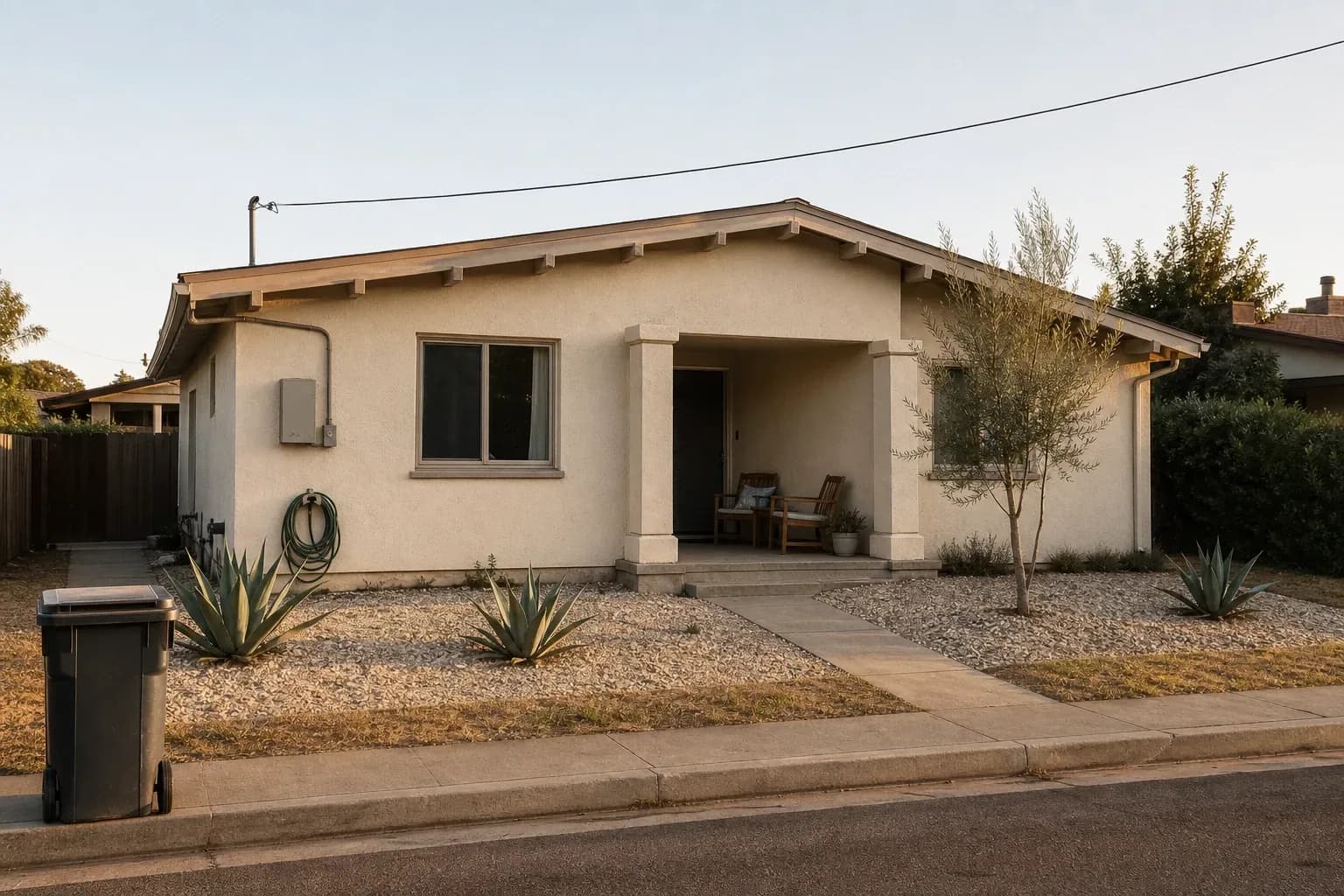
The scope is wider than the vendor coverage suggests, too. Because the statute names facade, landscaping and floor plans alongside furniture, an exterior render and a garden render fall inside it exactly as an interior does, and so does a 3D floor plan generated from a flat drawing. Agents who have carefully labelled their staged living rooms and left an enhanced kerb-appeal shot untouched by any disclosure have the logic backwards. The elevation is the one the statute names explicitly.
Wisconsin is where competitor articles get sloppiest. 2025 Act 69 amends Wis. Stat. 452.136(1m) to require disclosure where technology, AI included, modifies advertising in a way that creates a false or misleading impression. Several blogs report it as a 2026 obligation. It takes effect in 2027. The Metro MLS rule already binds Wisconsin members today, so the practical answer is unchanged. The date is not, and a blog that gets it wrong is telling you how much of the rest it checked.
New York has no statute, only a Department of State trend alert from 13 November 2025, in which Secretary of State Walter Mosley warned that "these automated technology tools may produce misleading or exaggerated representation of properties" (NY DOS). Enforcement runs through existing advertising rules, which is a quieter but real risk to a licence: there is no fine schedule to read, and no threshold below which you are safe.
One correction, because published content gets this wrong repeatedly. NAR's 2026 Code of Ethics sets the standard through Article 12 and Standard of Practice 12-10, and the words "including use of misleading images" are genuinely there. But all 26 Case Interpretations under Article 12, numbers 12-1 through 12-26, were read for this piece and none addresses photo manipulation or virtual staging. Any blog citing a specific NAR virtual-staging case, or a NAR-mandated watermark format, is inventing it. NAR gives you the duty; your MLS gives you the mechanics.
Disclosure wording you can copy
No single sentence satisfies every board. What follows is the union of the verified rules above, in the four places disclosure actually has to appear. Use as many rows as your jurisdiction demands.
Four disclosure variants and where each one belongs.
| Where it goes | Wording | When to use it |
|---|---|---|
| Burned onto the image, lower corner | Virtually Staged | Every altered image, every market. The only version that survives syndication, screenshots and social shares. Size it to stay readable as a thumbnail. |
| Photo description or caption field | Virtually staged. Furniture digitally added; no structural or permanent features altered. | Boards requiring caption-level disclosure. CRMLS accepts "digitally enhanced", "digitally altered" or "virtually staged", so any of the three is safe there. |
| Public remarks, as the opening words | One or more photo(s) was virtually staged. | Stellar MLS requires this placement. Cheap insurance elsewhere, and it reaches buyers who never read a caption. |
| Adjacent to the image (California) | This image has been digitally altered. View the unaltered original: [URL] | AB 723. Host the untouched original at a stable public URL and add a QR code for print and window cards. |
Two things this quietly rules out. A caption alone fails the moment an image is pulled into a portal feed or a social post that strips captions, which is why the on-image label leads. And a vendor's product watermark is not a disclosure: it identifies the tool, not the edit, and a buyer has no way to read it as a statement about the property. Axisnook's free plan watermarks exports; paid plans remove the mark and add a commercial-use licence, at which point the disclosure label becomes your job rather than the software's.
Be precise with the term as well. "Virtually staged" means furniture was added to a real room. "Virtually renovated" means finishes were changed, which on most boards means the image does not belong in the gallery at all. Using the friendlier word for the riskier edit is how careful people collect citations, and it is the version a complaint will quote back at you.
What AI staging gets wrong, and why that is a compliance problem
Every vendor blog in this category is bullish and none of them publishes a failure. That matters, because the specific ways image models fail map almost exactly onto the edits your MLS forbids. You are rarely caught by the change you meant to make.
[AI tools] can misjudge space, distance, and ergonomics.
Chaos, maker of V-Ray and Enscape (blog.chaos.com)
That is the incumbent renderer describing the category it competes with, so treat it as a hostile witness rather than marketing. The same piece warns that outputs can show "unrealistic materials and proportions, sometimes to a point of a design being physically impossible to build", and that any AI output "should always be reviewed by an interior design expert for errors or missteps". Independent testing finds the same things. A designer running one room through several tools found one that "completely changed the orientation of the room" while still looking photoreal, and another that adds "big changes to the room such as extra windows or doors" (Spaces by Dee).
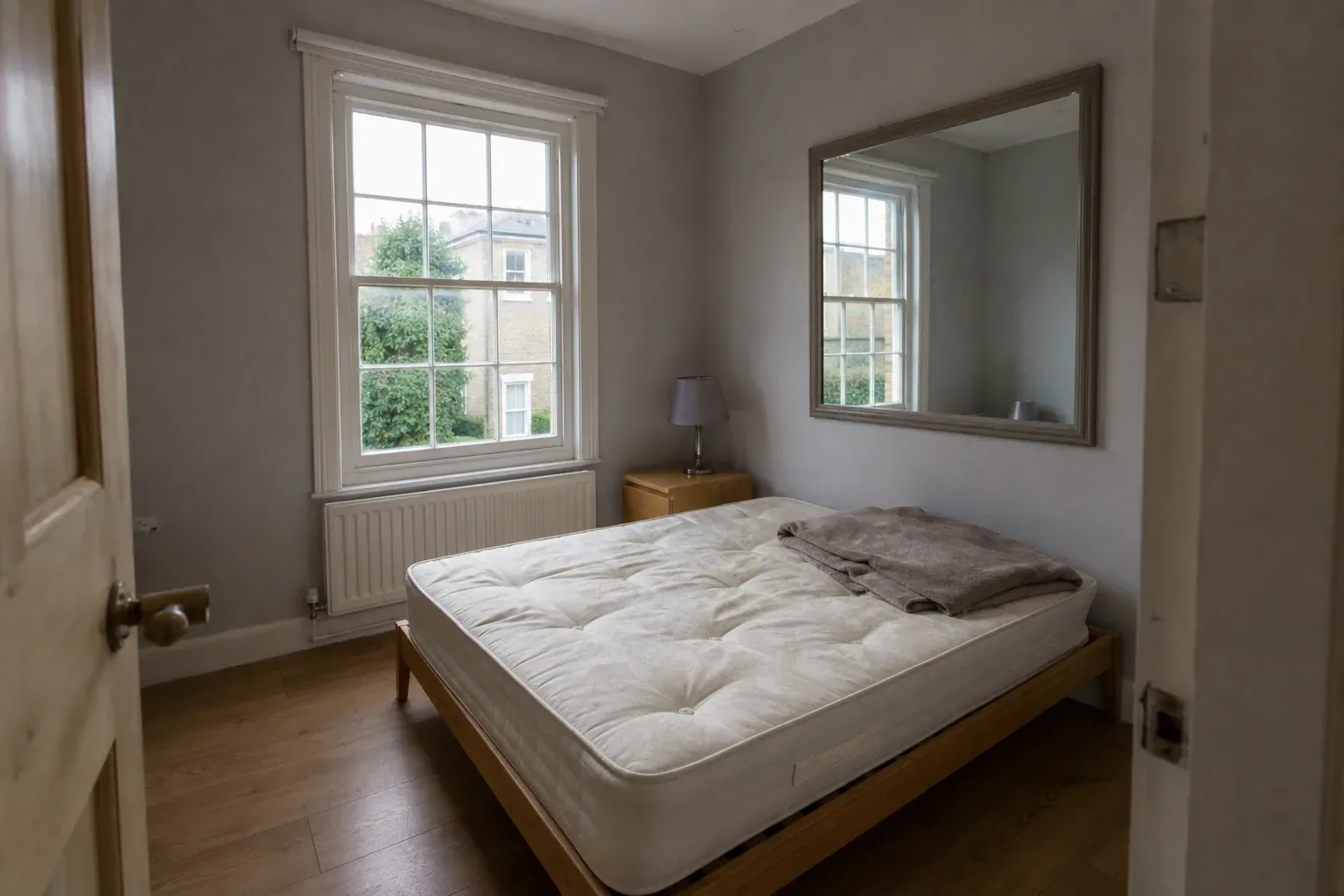
Read those failures against the rules. An invented window is an altered structural feature. A drifted ceiling height is an altered wall dimension. A silently rotated room misrepresents the layout, and it is the hardest error to catch because nothing in the frame looks broken. Nobody set out to break the CRMLS rule, and it broke anyway. A second mechanism compounds it: without a fixed seed, a diffusion model does not edit an approved image, it generates a new one. Ask for the sofa a shade lighter and the whole room can re-roll, including the parts you already checked. That is why a render approved on Monday and revised on Thursday needs the full comparison again, not a glance.
Removal has its own failure signature, and it is the one that catches photographers working on occupied homes. Ask a model to take out a sofa and it must invent the floor, skirting and wall behind it, which is where a floor transition strip, a socket, a vent or the bottom of a radiator quietly disappears. Empty a whole room in one pass and the same thing happens along every wall at once. The fix is procedural rather than technical: do the removal as its own pass, look at the emptied plate before any furniture goes back in, and treat anything that vanished as a defect rather than a tidier result.
Run this at 100% zoom, original and render side by side, before anything reaches the MLS:
- Count windows and doors in both images, including any window seen through a doorway. They must match exactly.
- Trace every mullion and glazing bar. Warping here is the single most common failure.
- Check the flooring direction and pattern continue correctly around anything you added.
- Check every mirror and glazed surface, where reflections drift out of sync with the room.
- Check radiators, vents, thermostats, sockets, switches and meters are still present and in place.
- Check the view through every window. Neighbouring properties are named in AB 723.
- Sample wall colour and cabinet finish against the original rather than judging by eye.
- Check the frame edges and corners, where models cut corners most and reviewers look least.
Enforcement is real, and buyers are already looking
The fines are modest and the process is usually corrective. CRMLS issues a warning, then a $250 fine if the listing is not fixed in time. Stellar MLS removes the offending photos and applies an automatic fine. Neither ends a career. What follows a removed photo is a listing gallery with a hole in it during the two weeks that matter most, and a correction notice with your name on it inside a system your competitors also read.
Detection is getting cheaper too. San Diego MLS has been working with Coraly on an AB 723 compliance flow that scans images at upload, flags likely alteration, matches them to originals and generates public proof pages. Coraly's own review of 40,000 primary listing photos put the alteration rate at 8.7% on Realtor.com, 11% on Zillow, 11.2% on Redfin and 12.4% on Homes.com. The interesting number is not the average but the spread: whichever portal you syndicate to, roughly one listing in ten is already carrying an edit nobody declared.
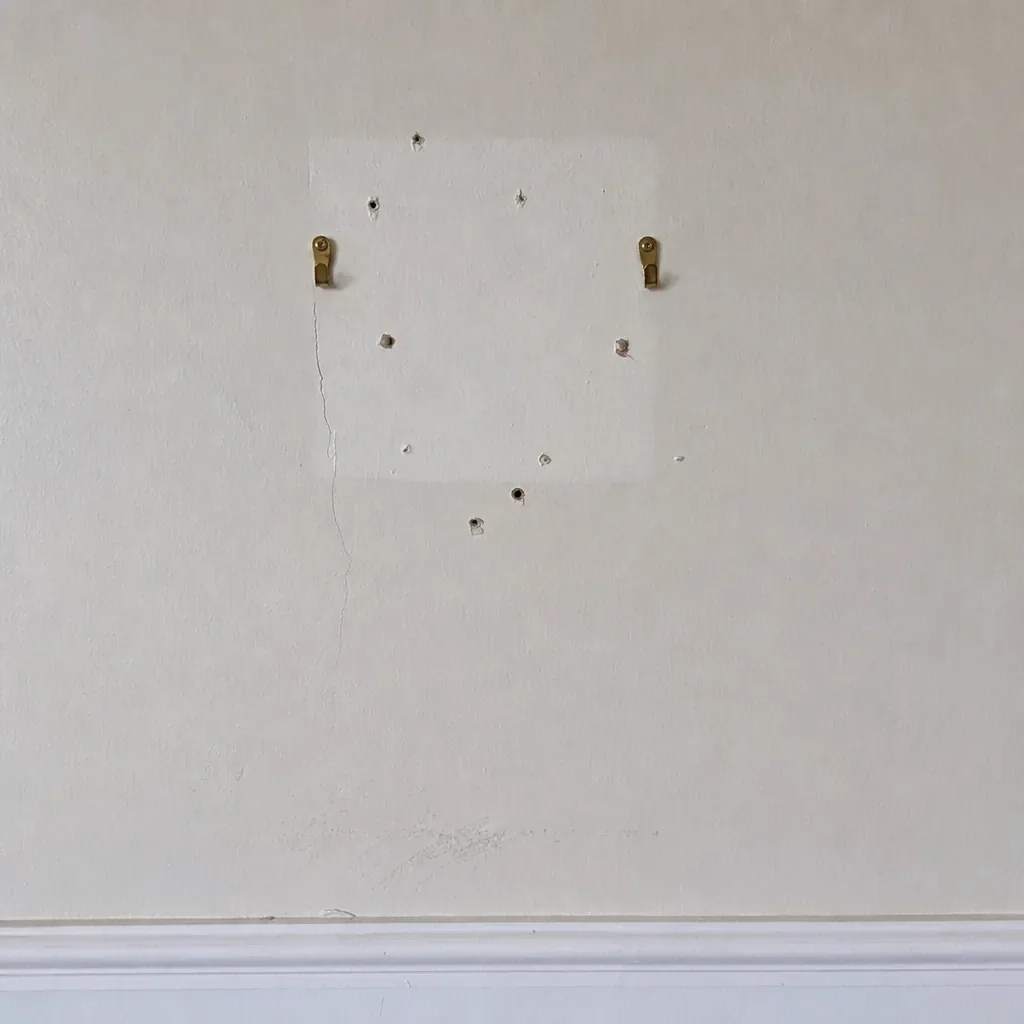
Buyers are being coached. The New York alert tells consumers to "check if there are any distorted or inconsistent details. For example, watermarks, blurry backgrounds, or inconsistent window views", and closes with a line worth pinning up: "Real homes always have small imperfections." That is a state telling the public to read your photographs forensically, and the detail it points at first is the window view. Slate found the resentment already forming.
The photos made the home look brand new, only to get there and see the usual wear and tear.
DeAnn Wiley, quoted in Slate
Florida Realtors has a name for the pattern: housefishing. Its February 2026 piece cites NAR research that 81% of buyers rate listing photos the most important factor, and quotes Atlanta stager Krisztina Bell with the short version of the debate, "Buyers should know when images are digitally altered" (Florida Realtors). The uncomfortable pairing is that photos matter more than anything else in the listing and are the easiest part of it to overstate.
Read the counter-evidence before building a business on this. The Staging Collective, a group of 45-plus North American staging companies, claimed in February 2026 that virtually staged homes take two to three weeks longer to sell than un-staged ones. The basis is one member tracking her local market for a year, sample size undisclosed, so treat it as trade-group advocacy rather than a study. Do not pretend it was not made, though. If you are pricing it as a service line, your clients may have read it, and the answer that survives the conversation is a disclosed, accurate render rather than a claim about days on market.
A workflow that keeps you compliant
The order of operations matters more than the tool. This sequence satisfies every verified rule above at once, and it is built so that the expensive mistakes become impossible rather than merely discouraged.
Archive the untouched original first
Save the unedited file with the listing record before anything else. CRMLS requires the original to appear immediately before or after the altered image, and AB 723 requires a public link to it. Both are impossible after the fact.
Empty the room, then stage it
Two passes, not one. Removing and restaging in a single generation makes it impossible to tell which pass deleted the vent.
Add furniture, decor, rugs and artwork only
No people, pets, lifestyle scenes or signage, per Metro MLS. No repainting, new flooring, cabinet swaps or landscaping changes, per CRMLS and Stellar.
Run the eight-point comparison
Original and render at 100%, side by side. Repeat after every revision, because every revision is a fresh generation.
Burn the label onto the image
"Virtually Staged" in a lower corner, sized to stay legible as a thumbnail. Do it before export so no untagged copy ever exists.
Fill every MLS field the board gives you
Photo description, the virtually-staged flag, and public remarks. In Stellar territory the remarks sentence goes first, ahead of your marketing copy.
Publish the original beside the altered image
Immediately before or after it in the gallery. In California, also host it at a stable public URL and put the link or QR code next to the altered image.
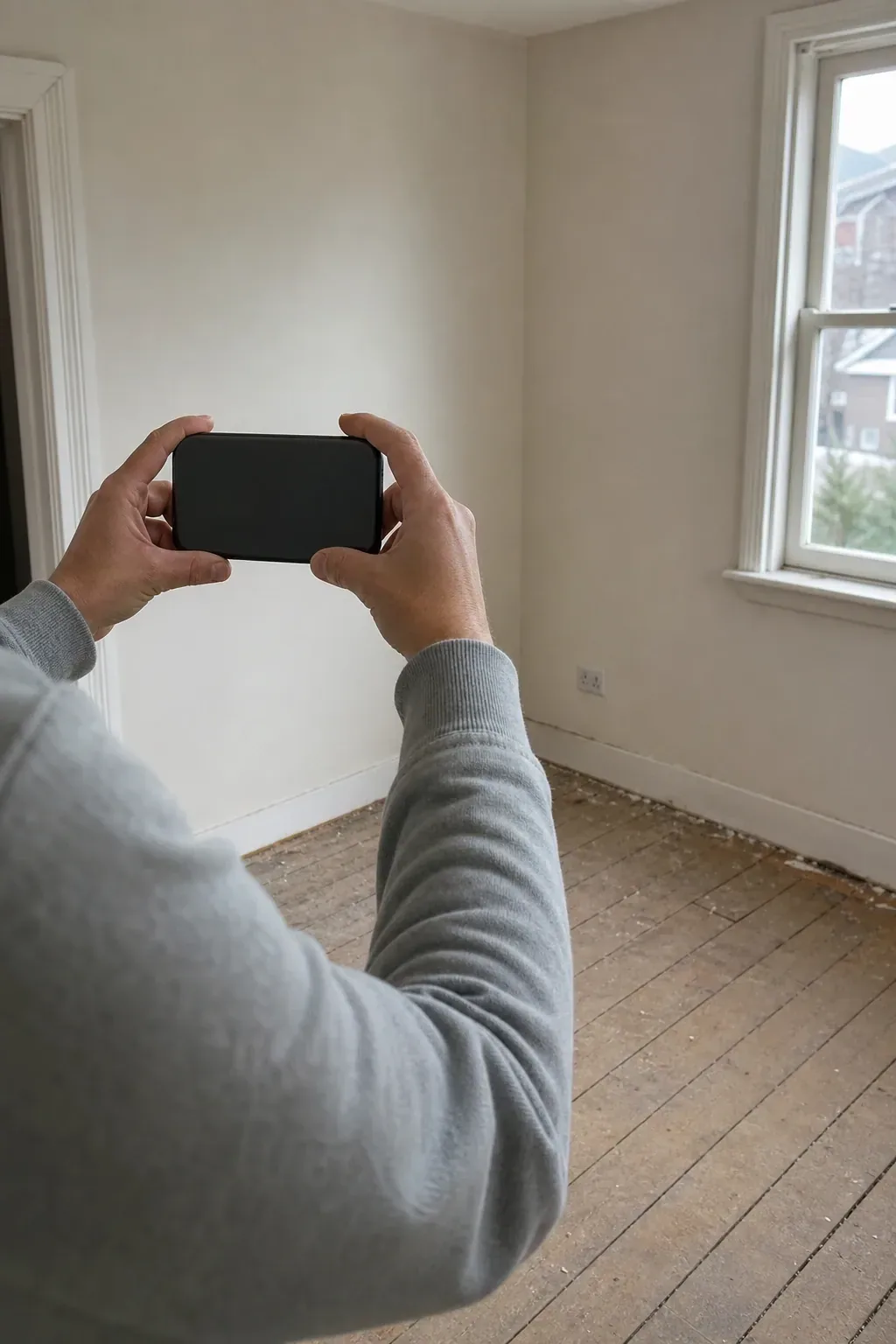
One habit worth building: when a listing goes under contract, the disclosures do not expire. Leave the labels and the originals up. The gallery outlives the sale on portals, in saved searches and in screenshots, and a label removed to tidy the record is the version somebody will find later.
How to find your own MLS virtual staging rules in ten minutes
This article has read six sets of rules. There are many more, and yours is the one that binds you. The fastest reliable route to it:
- Open your MLS's Rules and Regulations document, not its blog or help-desk article. The rulebook is the enforceable text; summaries lag.
- Search it for these terms in order:
virtually staged,virtual staging,digitally altered,digitally enhanced,photograph,image,alteration,misleading. - Find the citation or fine schedule, usually a separate appendix, and search it for the same terms. That tells you what a breach costs.
- Check your state real estate commission's advertising rules separately. New York shows how a state can bind you with no MLS rule involved.
- Read the terms of the portals your listings syndicate to. Syndication is not a transfer of responsibility.
- Email the help desk about anything ambiguous and keep the reply. A dated written answer from your board is the most useful thing you can hold in a dispute.
Then diarise a re-read. Three of the six rules cited here did not exist in their current form eighteen months ago, and Wisconsin's statutory duty has not started yet.
Common questions
- Is virtual staging legal?
- Yes, everywhere checked here, provided you disclose it and only add furniture and decor. What breaches MLS rules almost everywhere is altering permanent features: paint, flooring, cabinets, fixtures, dimensions, landscaping and facade. The risk sits in the alteration and the silence, not the staging.
- Can I remove a tenant's furniture from a listing photo?
- Removal is an alteration, and it needs the same disclosure as addition: the on-image label and every MLS field your board provides. Keep a dated note of what was removed with the listing file, and check with the listing agent before removing anything that belongs to the property rather than the occupant.
- Do I have to disclose if I only decluttered?
- Assume yes. CRMLS covers images changed to "add, remove, replace, or modify" visual design elements, and removal sits squarely in that. AB 723 exempts lighting, white balance, cropping and straightening, which is a different thing from taking objects out of a room. If it was there and now is not, label it.
- Does a watermark count as disclosure?
- A watermark reading "Virtually Staged" does, and it is the most durable form because it survives syndication and screenshots. A vendor's branding watermark does not, since it identifies the tool rather than the edit. No verified MLS rule mandates a specific font, size or position, despite several blogs claiming otherwise.
- Do the same rules apply to AI-generated listing video?
- Less settled, so be more careful. AB 723 is written around images, and no MLS rule reviewed here addresses AI video specifically. But NAR Article 12 covers all real estate communications, and motion implies things a still does not: walkability, sightlines, lot boundaries. Metro MLS bans inserted human figures, which rules out a populated walkthrough in that market. Ask your board and get the answer in writing.

Written by
Axisnook Editorial Team
Design visualization writers at Axisnook
The team that builds and supports Axisnook, writing from the render queue rather than the press release.
- Interior and exterior design visualization
- AI render workflows and prompt design
- Client presentation and revision process
- Real-estate listing and virtual-staging disclosure