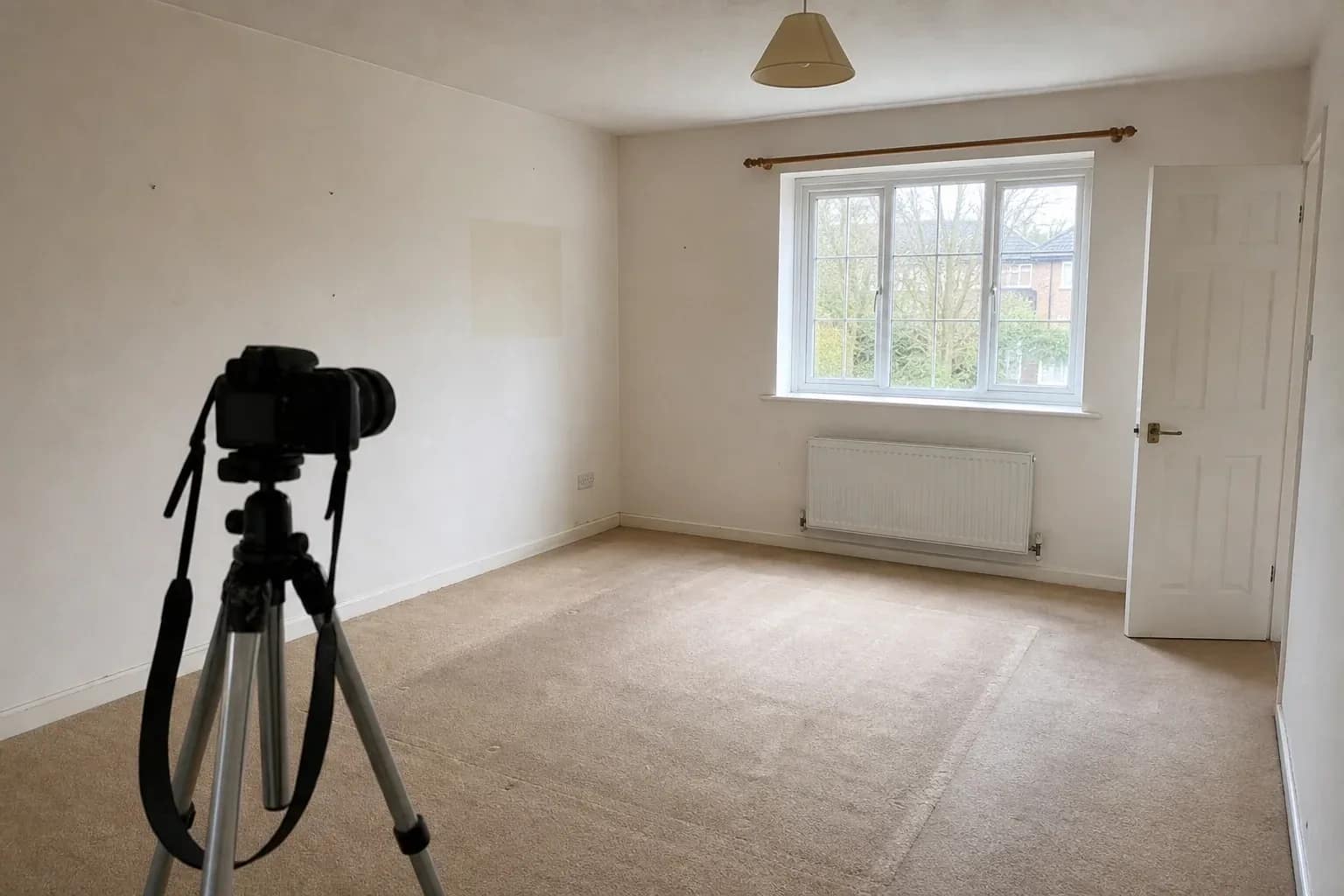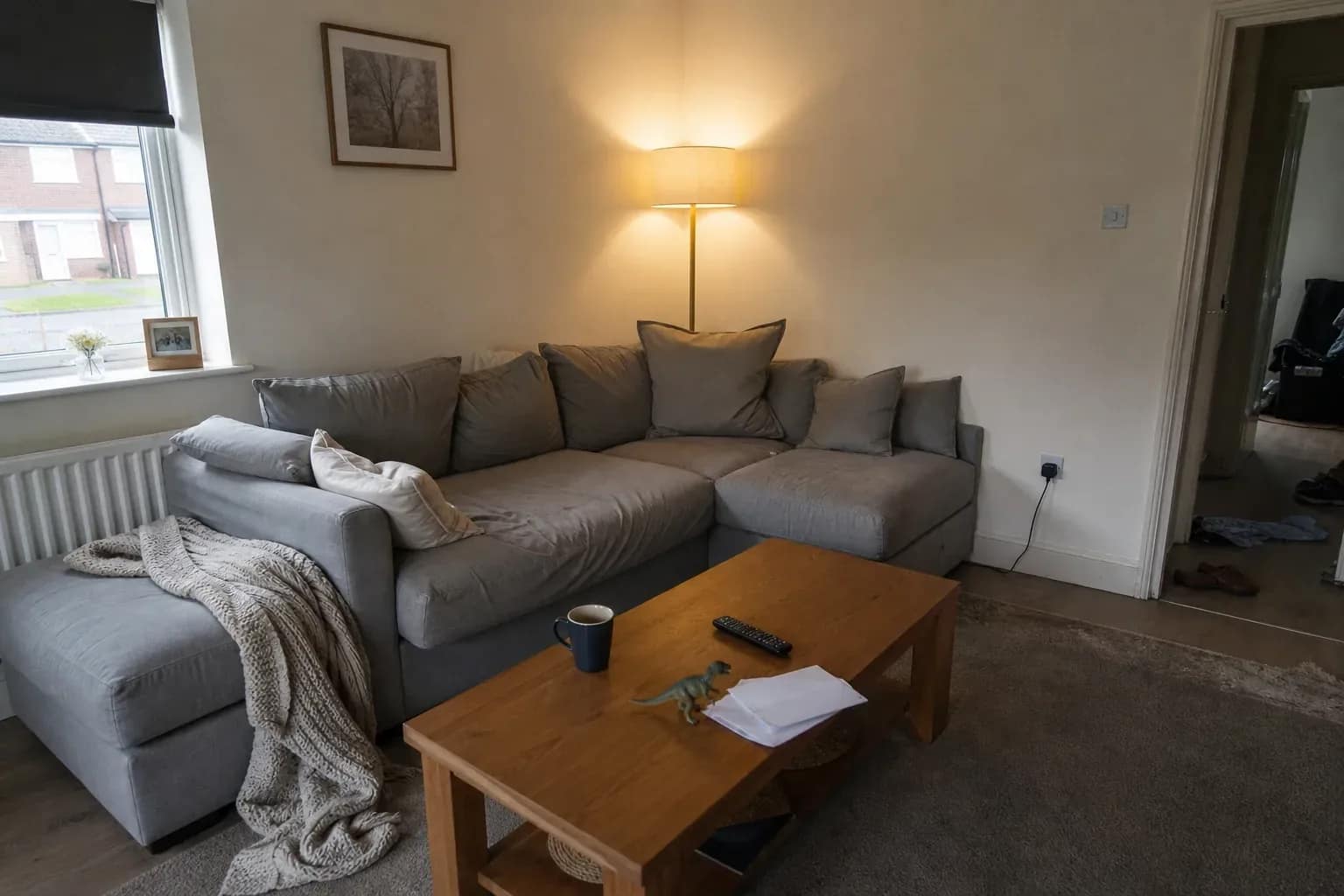
An agent asks what you charge to stage the three empty bedrooms, you invent a number on the phone, and that number is still your rate two years later. Nobody ever went back and worked out what the service costs to deliver. This is that arithmetic, in the order you need it.
The numbers everyone quotes, and where they came from
Every answer to how much to charge for virtual staging as a photographer starts from a range somebody else published. Those ranges are real in the sense that people transact inside them. They are not measurements. None of them traces back to a published survey: they circulate through vendor and photographer blogs, most of which sell staging or staging software, and they converge partly because they copy one another. Treat the table as an opening position, not a benchmark.
Indicative market ranges as they circulate through vendor and photographer blogs. Not survey data; sanity-check them locally before pricing against them.
| Service | Commonly quoted range |
|---|---|
| Outsourced human staging, standard | $15–$35 per image |
| Traditional manual staging houses | $30–$75 per image, quoted at 48–72 hours |
| Rush surcharge | +$10–$20 per image, or +50% |
| Flat per-listing package | $59–$149 for all rooms |
| Whole-property package | $250–$450 per property |
| Self-serve AI tools | $0.10–$5 per image, 30–90 seconds |
| Physical staging, vacant four-bed | $3,000–$5,000 setup plus monthly rental |
Demand is not in question. Florida Realtors, summarising NAR research, reports that 81% of buyers rate listing photos as the most important factor in their search, and that roughly half of agents say buyers now expect television-level staging. A 2026 study by Coraly of 40,000 portal listing photos found about 11% showed evidence of alteration. Staging is already in your market whether or not it is on your rate card.
What changed is the floor. Human-edited staging sat at $15 to $35 an image because a person did the work by hand, one image at a time. A self-serve render lands in well under two minutes and puts the marginal cost of one attempt in the cents. Your price does not follow it down. What is left between price and cost is your time, your judgement, and the responsibility of handing a client a photograph of a room that does not exist.
Cost your delivered image, not your attempt
Subscription pricing hides the number you need. Axisnook sells credits: Starter is $9 a month or $81 a year for 30 credits a month, Pro is $39 a month or $351 a year for 120. Divide plan price by credits and you have a cost per credit — the only fixed input in the calculation.
The variable input is the one nobody publishes: how many credits you burn to get one image you are willing to send. Not one render. One accepted render. Generate four versions of a living room and deliver the third, and that room cost four attempts. Garden Redesign is the one studio with a flatly published per-render price, at 3 credits, so check what your studio charges before you price off it.
The arithmetic is two divisions, and it is worth doing against the plan you are actually on rather than against a table somebody published. Plan price over credits per month gives you a cost per credit. Cost per credit times credits burned gives you the software cost of one delivered image. Annual billing moves the first number and nothing else. The pricing page carries the current figures for both plans.
Run it at eight credits per accepted image — a bad room on a bad day — and the software is still a small fraction of what you will charge for the room. Your real cost is minutes, and it is an order of magnitude larger. Never price against the credit: an agent who senses you are pricing off compute will ask you to price off compute.
Worked through, with numbers you should replace with your own: ten real rooms take 26 credits and 140 minutes to produce ten files you would actually send. That is 2.6 credits and 14 minutes a room — a couple of credits of software, and $17.50 of labour at $75 an hour. Price that room at $35 and roughly half of it is your time, which is the half you can improve. Nothing you do to the credit line will move the invoice.

Use ten real rooms
Not test shots. Your accept rate on a room you chose is nothing like your rate on a room an agent chose.
Log every attempt
Count generations, not keepers. The render you discarded in four seconds cost exactly what the one you sent cost.
Run a clock
Start when you open the file, stop when the image is exported and named. Include the prompt fiddling and the fixes.
Divide twice
Credits over accepted images is your burn rate. Minutes over accepted images is your labour per room.
Re-measure when the input changes
A new camera body, a different style preset, a run of tight vacant bedrooms. Burn rate moves with the input, not the tool.
Where the re-rolls come from
You cannot cost re-rolls without admitting they happen, and this industry has been quiet about that. The clearest statement comes from Chaos, which makes V-Ray and Enscape: AI tools "can misjudge space, distance, and ergonomics" and can produce unrealistic materials and proportions. A designer who ran the same rooms through a batch of consumer tools found one that "completely changed the orientation of the room" while still looking photographic, and another that added windows and doors that were not there. She also flags bedding as a recurring weak point.
In practice a short list of rooms will always cost you more attempts than the rest:
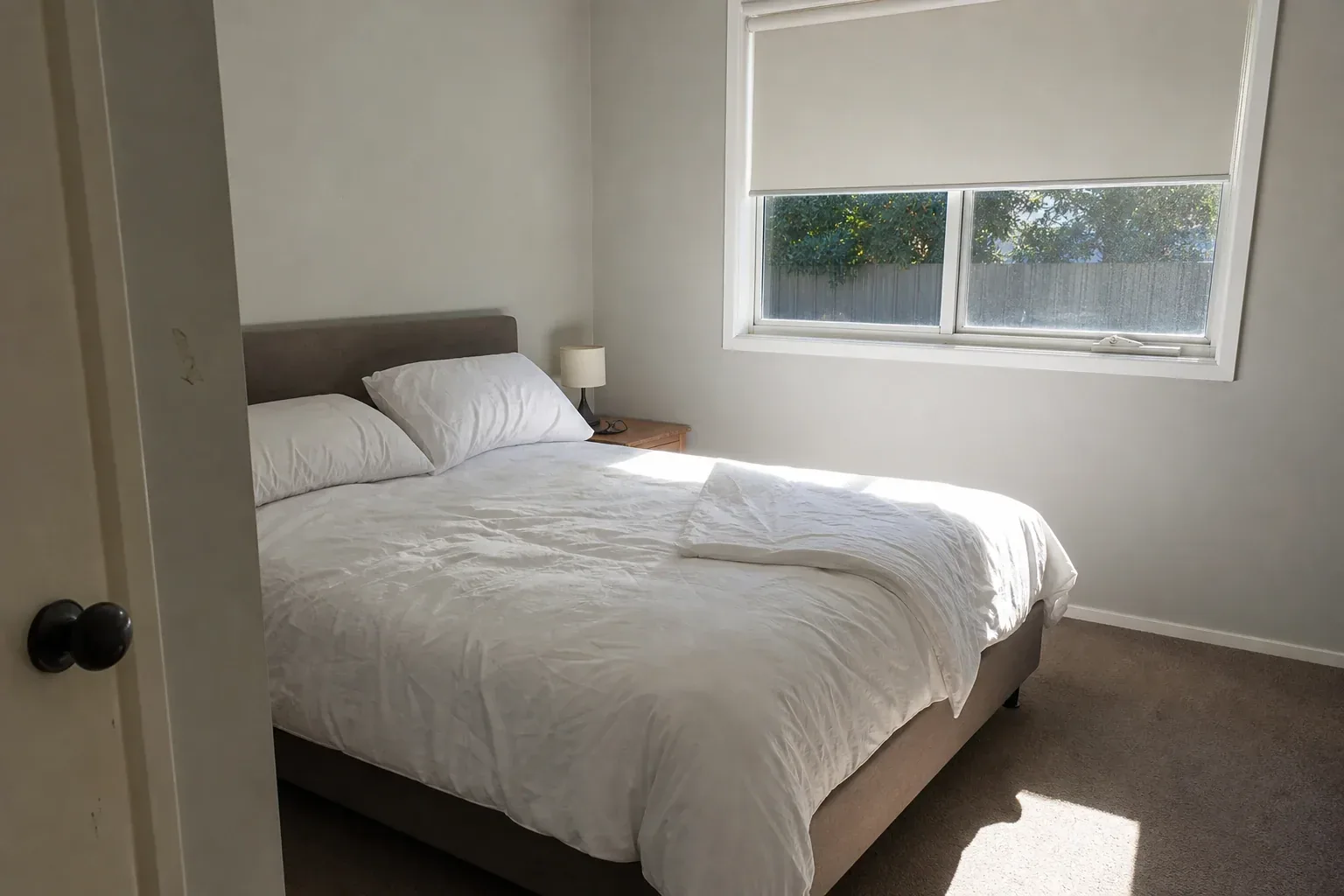
- Bedrooms. Pillows multiply, duvet seams wander, the bed changes size relative to the nightstands.
- Rooms with a lot of glazing. Mullions bend, glazing bars gain a pane, reflections stop agreeing with the view.
- Narrow rooms shot wide. The model exaggerates the depth your lens already exaggerated, then puts a sofa where you could not walk.
- Built-ins, fireplaces and flooring thresholds. The fixed features that must survive are usually the first to drift.
- Anything with a mirror. Mirror logic is the most reliable tell in a delivered file.
There is also a reproducibility problem that costs money. Image models generate from a seed, and without one pinned an approved image cannot be regenerated exactly, so "can you make the sofa lighter" re-rolls the whole room. Two habits absorb most of that. Save the accepted file the moment it is accepted. And make small changes with a masked edit, brushing only the region you want changed, so nothing outside the brush is touched.
The cheapest re-roll is the one you avoid on site. Shooting so the staging pass works first time — a corner position with two walls meeting, a level horizon, a clean band of floor, one dominant light source — moves your burn rate further than any prompt does.
Three ways to price it
There is no single right answer to how much to charge for virtual staging as a photographer. There are three structures that hold up, and choosing between them is really choosing which argument you want to have with clients.
Per image
The simplest model, and the one agents grasp instantly. Pick a number in the $25 to $40 band and hold it. Six rooms at $35 is $210, against a handful of credits and an hour and a half of work at the rates in the example above. That is an effective hourly rate that beats the shoot itself.
What per-image pricing does badly is protect scope. Every room becomes a separate decision, so every room is a small negotiation, and the room they cut is usually the one that would have sold the house.
Per listing bundle
Flat per-listing packages circulate at roughly $59 to $149 for all rooms, and whole-property packages at $250 to $450. A bundle ends the room-by-room argument. Write it as a cap rather than as "all rooms": five rooms for $139, additional rooms at $25.
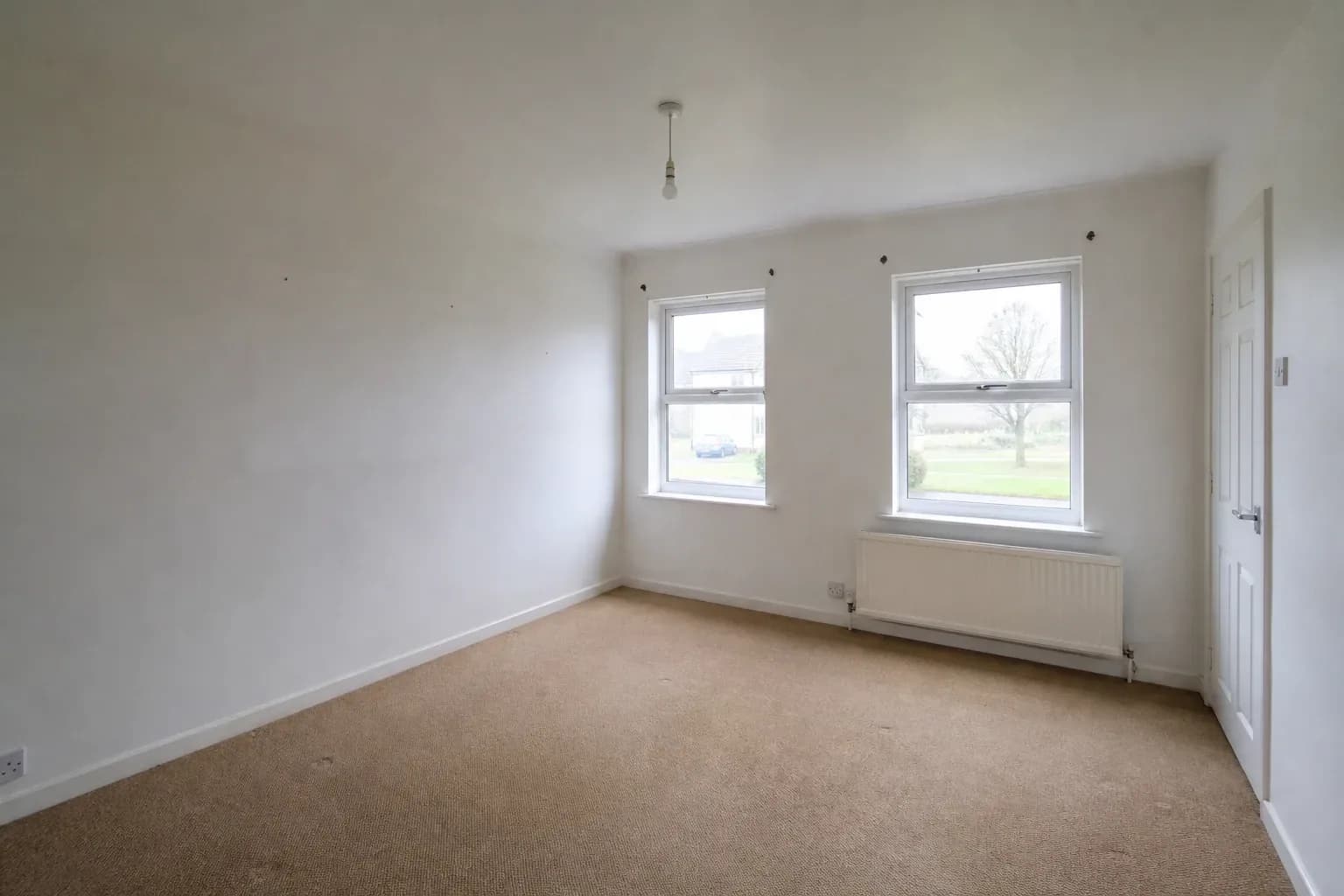
Set the cap where your median listing sits, not where your biggest one does. If most of what you shoot is a three-bed with two rooms worth staging, a five-room cap reads as generous and you rarely pay for it. Quote occupied listings, which price differently as their own line: an occupied room usually needs removal rather than furnishing, which is faster for you and cheaper for them.
Tiered by turnaround
The same deliverable in three windows. Standard at 72 hours. Next day at +50%. Same day at +100%, files in by 11am and out by 6pm, capacity permitting. Staging houses are quoted at roughly +$10 to $20 an image, or +50%, for a rush, so a percentage premium is defensible and easier to say out loud.
A rush costs more because you are displacing somebody else’s edit, not because the render is harder — it takes the same ninety seconds at midnight as at noon. Say that to the agent in those words. It is a better argument than "rush fee".
Why bundling staging into your shoot price is usually wrong
The tempting move is to fold two staged images into the standard package and call it value. It usually costs you money.
- It hides the line the client values most. A price they can see is a price they can re-order. A price inside a total can only be compared against another total, and somebody is always quoting $199 for twenty-five photos.
- Staging demand is per-listing, not per-shoot. An occupied four-bed may need nothing; a vacant two-bed needs everything. A blended price overcharges half your clients and undercharges the rest.
- It destroys your rush pricing. You cannot charge a premium to accelerate a line item that is not on the invoice.
- It buries a compliance obligation in something the agent did not consciously buy. Someone who never noticed they bought staging will not notice they owe a disclosure.
- It sets an anchor you cannot walk back. Once staging is free with a shoot, charging for it later reads as a price rise.
The exception is a high-volume agent on a standing arrangement, where a flat per-listing price with a room cap saves you both from itemising every job. Even then, keep staging on its own line so the number stays visible.
The agent who wants fourteen rooms for the price of three
This happens because the agent has correctly worked out that one more render costs almost nothing, then wrongly concluded that one more delivered image costs almost nothing. The delivered image is the one you reviewed, rejected twice, fixed and stood behind. Do not answer with a discount. Answer with scope.
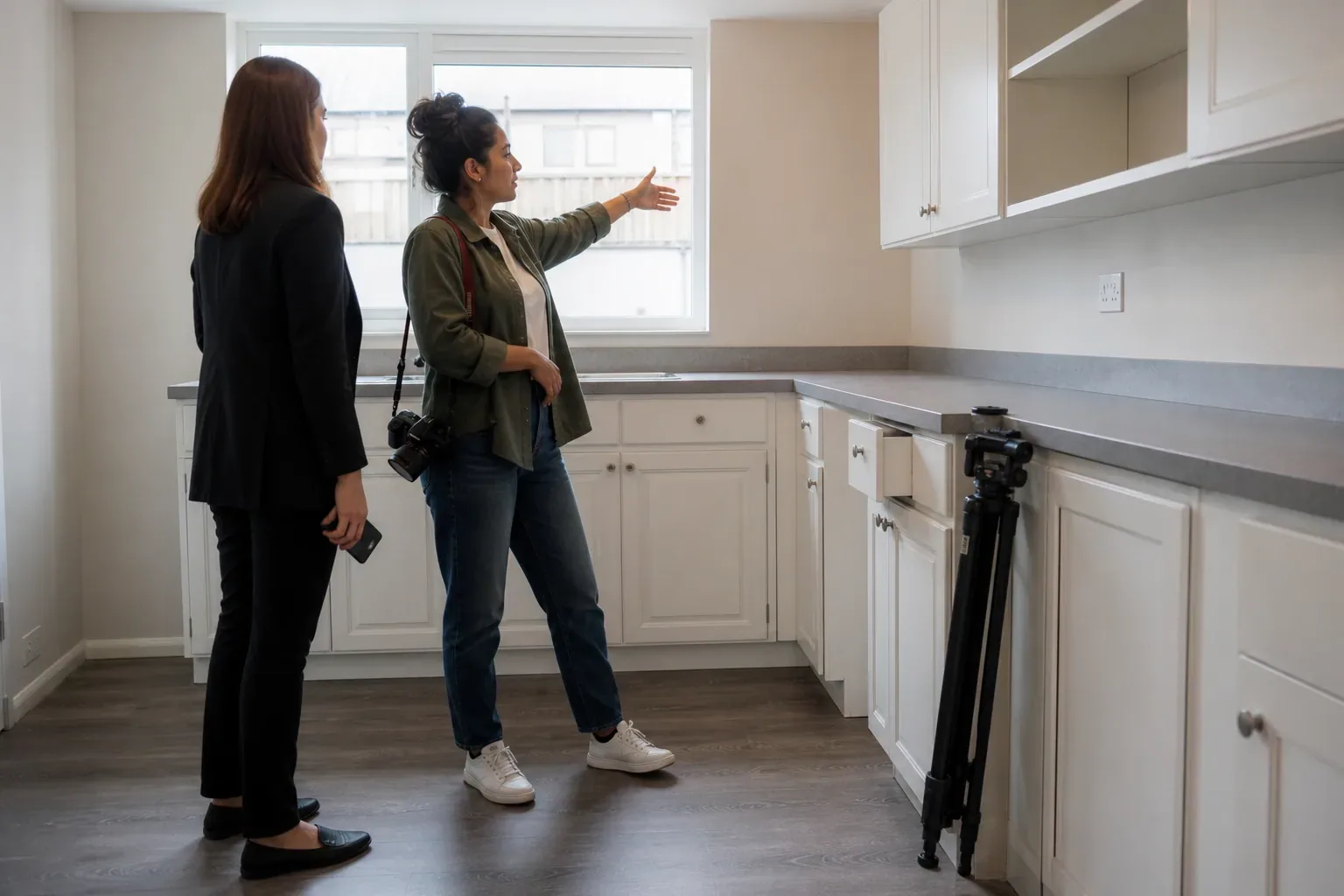
- Buyers rarely study fourteen staged rooms. Stage the ones that sell the property: main living space, empty kitchen, primary bedroom, one secondary bedroom, outdoor space in season.
- Offer the rest as a cheaper deliverable. Emptying a room with Furniture Cleanup is faster than furnishing one and should cost less. A second product, not a discount.
- If they genuinely want fourteen, sell a volume tier: on orders of ten rooms or more, rooms six and beyond drop to 60% of your per-image rate, standard turnaround only.
- Never move the published rate. Move the scope, or add a tier. A rate you discount once is the rate you have.
Locking the volume tier to standard turnaround protects your calendar. Otherwise the fourteen-room job quietly becomes the fourteen-room job due tomorrow, at the discounted rate.
Disclosure is part of what you are selling
A staged image is a file that the MLSs which have written rules treat as a regulated object, and you do not control the listing entry where the rule bites. That is why the obligation has to travel with the file.
The specifics vary by market and they are enforced. CRMLS accepts the labels "digitally enhanced", "digitally altered" or "virtually staged", requires that the unaltered original appear immediately before or after the altered one, and enforces with a warning then a $250 fine. Stellar MLS in Florida wants it in the photo description field, the virtually-staged field checked, and public remarks opening with "One or more photo(s) was virtually staged". California’s AB 723, operative 1 January 2026, requires a conspicuous statement on or adjacent to the image plus a link, URL or QR code to the unaltered version. Metro MLS in Wisconsin allows furniture, decor, rugs and artwork but bans people, pets, lifestyle scenes and signage. Over all of it sits NAR Standard of Practice 12-10, prohibiting manipulation that produces a deceptive or misleading result, including the use of misleading images.
None of that is your filing to make and all of it is your file. In the 40,000-photo study cited earlier, more than 90% of altered images carried no visible disclosure. Two changes cover you: deliver staged and unaltered files in separate, clearly named folders every time, and put one sentence in each of two places.
- In the delivery email: "The images in the folder marked STAGED are virtually staged. The unaltered originals are in the folder marked ORIGINAL. Both should be uploaded, and the staged images must be labelled according to your MLS rules before publication."
- In your terms: "Virtually staged images are supplied together with their unaltered originals. Disclosure and labelling in the MLS, on portals, in print and on social media is the client’s responsibility. No warranty of compliance with any MLS rule or statute is given."
Rules differ by MLS and by state, and following them is the client’s job. But the disclosure rules you inherit still shape what you can safely produce. The safe lane is narrower than the toolset: furnish empty rooms, remove clutter, never add people or pets, and never repaint, re-floor, re-clad or re-landscape a property you are shooting for a listing. CRMLS states that flatly — permanent features are off limits — and it is the rule most staging price lists quietly ignore.
The upsell ladder, stills into video
The staging line is not the top of your card. It is the middle. The ladder that works runs cheapest and fastest at the bottom:
- Declutter or empty an occupied room. Fastest to produce, easiest to sell, and often all a tidy occupied listing needs.
- Staged stills. Your core line, priced per image or per bundle.
- Staged stills plus one vertical clip for the agent to post. The same accepted render, animated.
- A full motion piece, for the listing that justifies one.
Axisnook puts video on the Pro plan at $39 a month for 120 credits, with 17 motion effects, 1080p output and both 16:9 and 9:16 framing, and any still render can be animated. Run the upgrade sum first: price one clip at $95 and the step up from Starter pays for itself on the first listing that buys one.
Price the reel per listing, never per second. There is no commodity rate for an AI listing clip the way there is for a staged still, which is why it is the most profitable line on the card — the agent cannot price-shop it against six identical vendors. Anchor it against what a local videographer charges for a short social edit, then land under that. And carry the disclosure with it. The MLS rules above are written about photographs, which does not make motion a loophole: a drone pull-back that was never flown implies a lot line, a view and a neighbour, none of which you photographed.
A rate card to start from
These are defensible middles of the ranges above, written as a card you could send today. Every number in it is a hypothesis until your own measurements confirm it.
A starting rate card for a listing photographer adding staging as a service line.
| Line item | Deliverable | Price | Notes |
|---|---|---|---|
| Virtual staging, per image | One staged room plus the unaltered original | $35 | Standard 72-hour turnaround |
| Staging bundle, up to 5 rooms | Five staged rooms plus originals | $139 | Additional rooms $25 each |
| Volume tier, orders of 10+ rooms | Rooms 6 and beyond, same deliverable | $21 | Standard turnaround only, no rush |
| Declutter or empty a room | Occupied room cleared, plus original | $20 | Often enough on its own |
| Next-day turnaround | Any staging line within 24 hours | +50% | Files in by 11am |
| Same-day turnaround | Any staging line delivered by 6pm | +100% | Capacity permitting, confirmed before invoicing |
| Vertical listing clip | One 9:16 clip, 1080p, from a delivered still | $95 | Priced against local video rates, not per second |
Now do the two things that make it yours. Call two competitors this week and ask for their price list as if you were an agent. Ask a regular client what they paid last time they bought staging elsewhere. Move your numbers once, then leave them for a year.
Common questions
- Should I charge less now that a render takes ninety seconds?
- No. You are selling a delivered file you stand behind and the judgement that picked it out of four attempts. NAR’s 2025 REALTORS Technology Survey found 46% of members using AI-generated content but only 17% reporting a significant positive impact. Access to the tool is not the scarce thing. Knowing when the output is wrong is.
- What if the agent says they will just do it themselves with a free tool?
- Some will, and they were never your client. Axisnook’s free tier gives 3 trial credits and exports with a watermark, and a watermarked image cannot go on a listing; watermark-free export and a commercial-use licence start at $9 a month. Then there is the part that is not software — the re-rolls, the originals to keep, the disclosure to file.
- Do I have to hand over the unaltered originals?
- Yes, and automatically rather than on request. CRMLS requires the unaltered version to appear immediately before or after the altered one, and California’s AB 723 requires a link, URL or QR code to it. If the originals sit in a named folder in your delivery, the client has no reason to skip that step and no reason to email you six weeks later.
- Does virtual staging actually sell the house faster?
- Be careful with anyone who says flatly that it does. The Staging Collective, a group of more than 45 North American staging companies, said in February 2026 that virtually staged homes take two to three weeks longer to sell — based on one member tracking her local market for a year, with the sample size undisclosed. That is trade advocacy rather than a study, and the same caution applies to the ROI numbers pushed from the other side. Sell staging as marketing spend that makes an empty room legible, not as a speed-up.
- How many rooms should I actually stage on a typical listing?
- Four to six covers most residential listings: main living space, kitchen if it is empty, primary bedroom, one secondary bedroom, outdoor space in season. Rooms beyond that mostly buy the agent peace of mind, which is fine to sell at a volume rate as long as you do not oversell it.

Written by
Axisnook Editorial Team
Design visualization writers at Axisnook
The team that builds and supports Axisnook, writing from the render queue rather than the press release.
- Interior and exterior design visualization
- AI render workflows and prompt design
- Client presentation and revision process
- Real-estate listing and virtual-staging disclosure