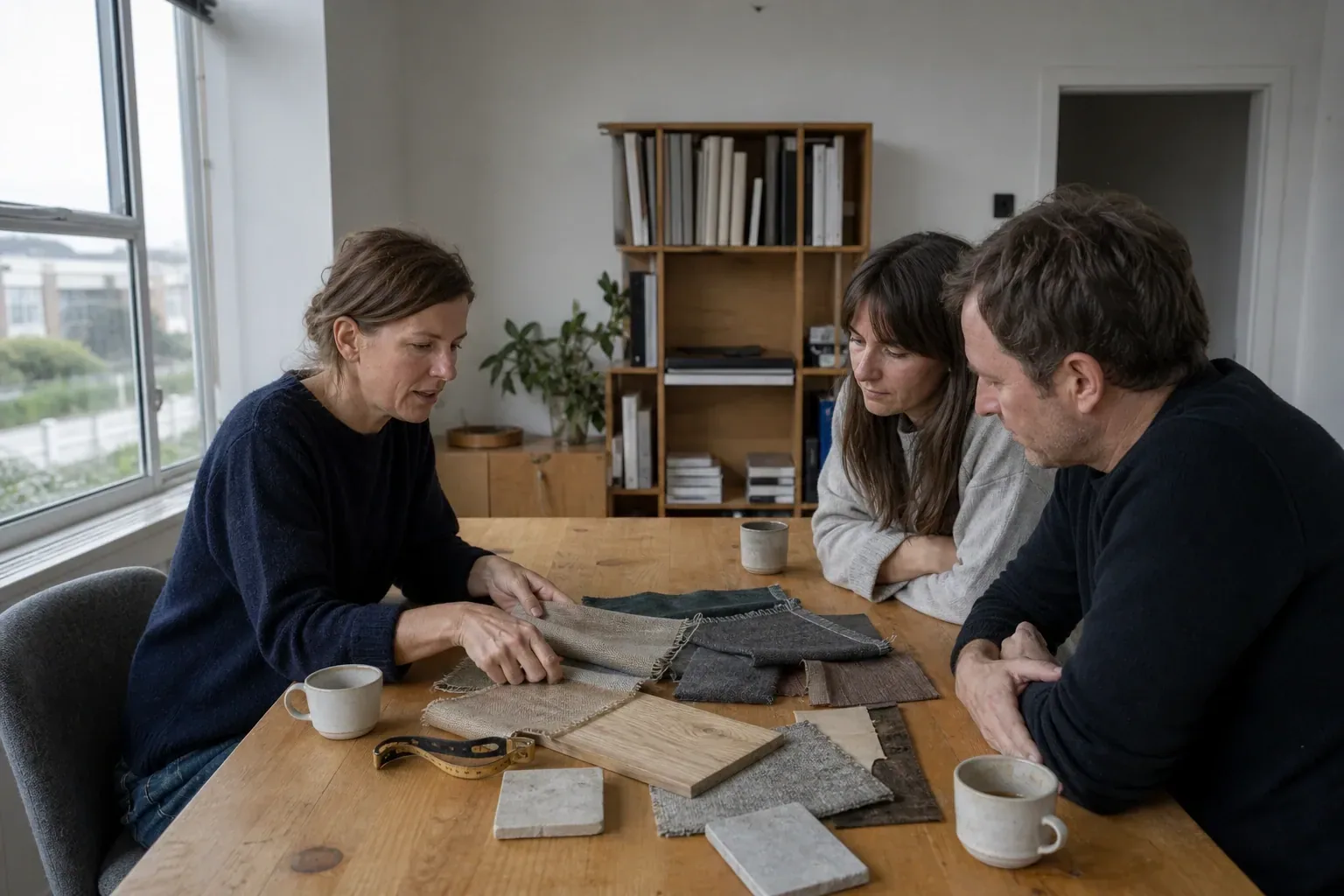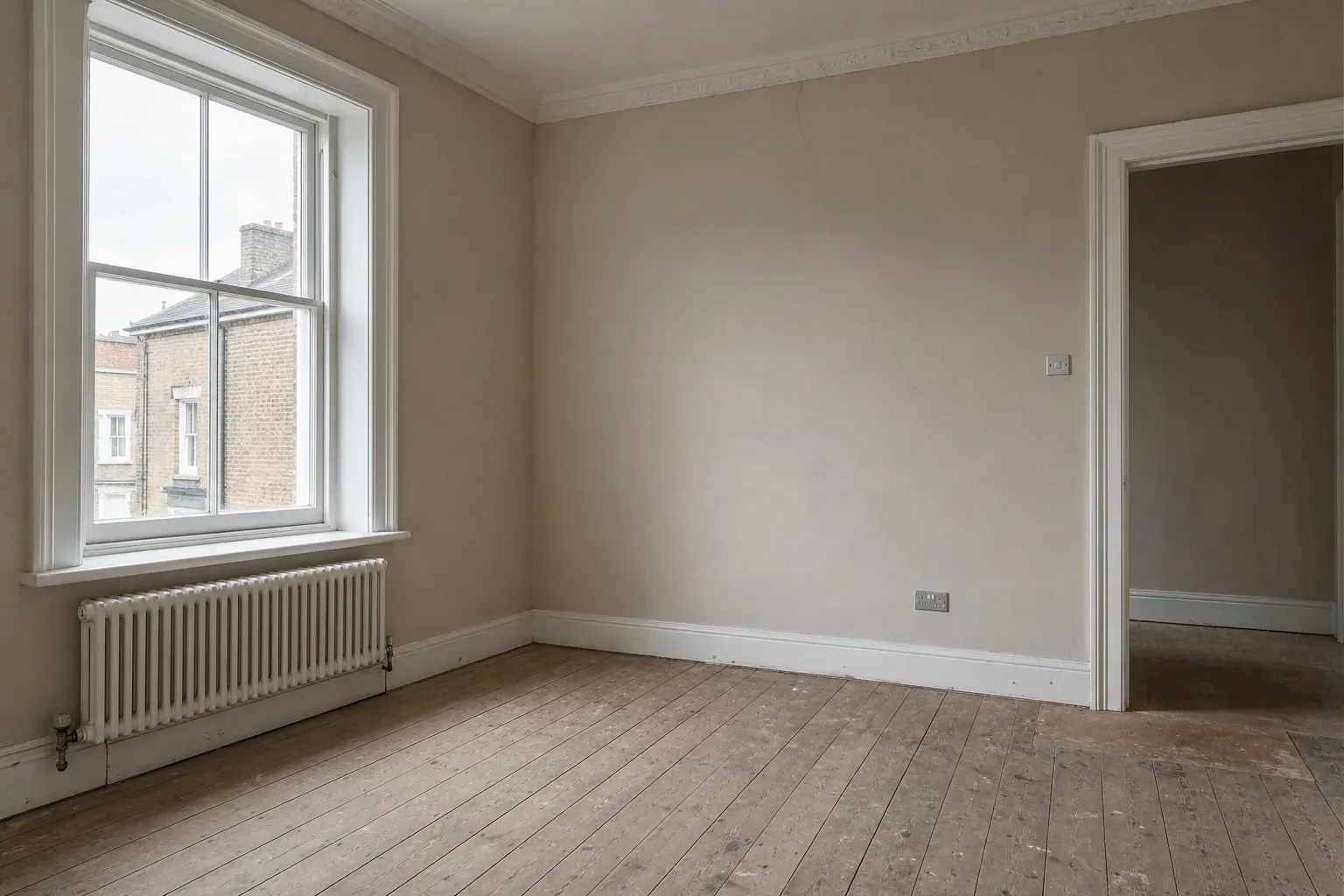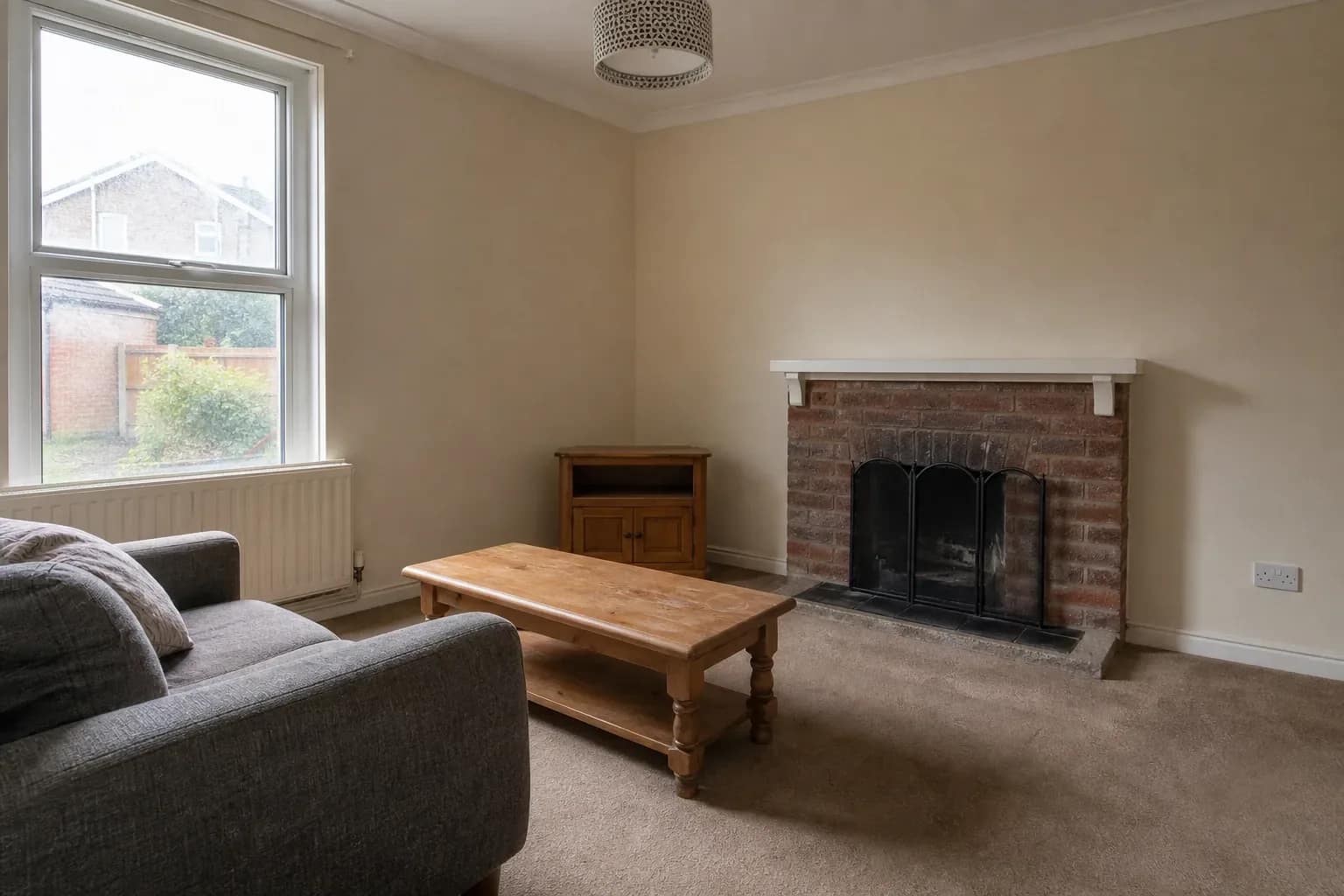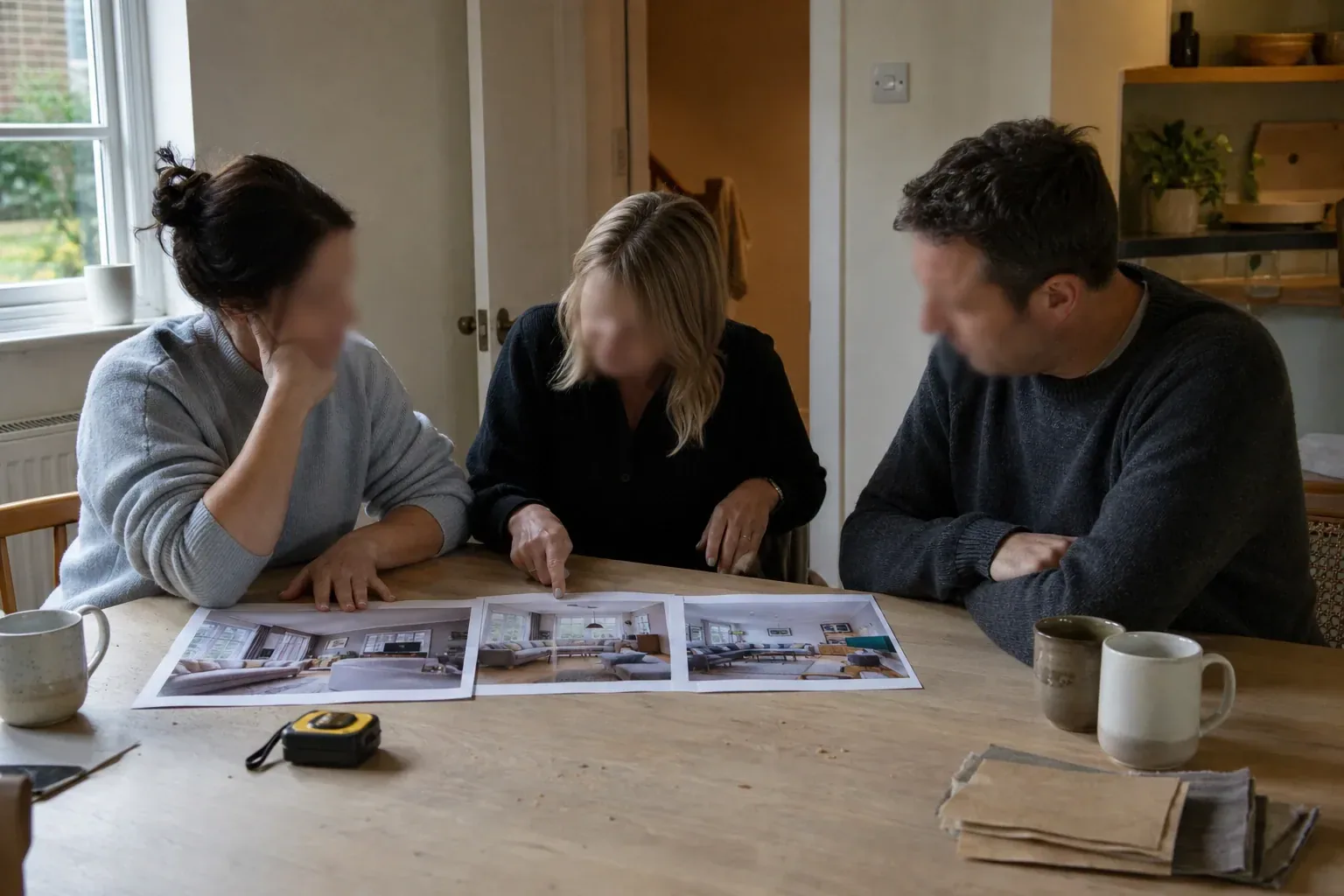
Most revision disputes are not about the number in the contract. They are about what counts as a revision. A clause promising two rounds without defining a round has not limited anything; it has handed both sides a number to argue over.
What a revision actually is
A revision is a unit of work, and a unit of work needs edges. A definition that survives contact with a real client has four parts. It attaches to a specific deliverable already presented. It stays inside a direction the client has already approved. It arrives as one consolidated set of written comments rather than a trickle. And it arrives within a stated window.
Each part is a door. Leave the deliverable unnamed and every email thread becomes a round. Leave the approved direction out and a client can re-open the whole scheme inside round two without breaking the clause. Allow comments to arrive one at a time and a single round stretches to six weeks. Leave the window open and a project you closed in March comes back in July. That is scope creep: not one dramatic change but an accumulation of requests nobody had a rule for. There are primers on it written for designers.
There is a client-service argument too. In Houzz's 2026 State of the Industry research, more than 40% of homeowners said a clearer timeline would have improved their experience, and the same share wanted better communication. A revision clause is a timeline document. It tells the client when they get to speak and what happens after.
How many revisions to include in an interior design contract
No standards body sets a number. What exists is a cost structure, and the two-round convention grew out of it.
Outsourced interior stills are commonly advertised at roughly $350 to $800 for a furnished living space, inside a wider band of about $200 to $1,500 an image, at three to ten business days for first delivery and one to four extra days per revision round. Rounds beyond the one or two included are typically quoted at $50 to $150. Those figures come from rendering studios' and AI vendors' own marketing pages rather than from any survey, so read them as what the market advertises, not as researched averages.
The production side matches. In Chaos and Architizer's State of Architectural Visualization survey of around a thousand architects and designers, 43% named slow rendering times as a major challenge, the biggest single pain point in the study. When one more view costs a day and a few hundred dollars, two rounds is not a philosophy. It is rationing.
So set your number from decision points rather than from a template. Most residential jobs have two obvious ones: the client picks a direction, then signs off on the specification. The matching structure is two rounds at concept, one at specification, nothing after sign-off except a change order. Add stages, add rounds. Do not carry rounds you will never use.
A revision is not a change of direction

This distinction does the work. Without it, the number of rounds is decoration. The test is one question: does the request keep a decision the client already made, or replace it? Adjusting inside an approved direction is a revision. Replacing the direction is new scope, priced as new scope even when phrased as a small thing.
The same conversation, classified
| The request | Usually | What it costs |
|---|---|---|
| Make the approved sofa a lighter grey | Revision | One comment inside the round |
| Swap the sofa for a sectional, re-plan the seating | Change of direction | New layout, new specification |
| Show the same scheme with the curtains open | Revision | A variant of an approved image |
| Show the snug as a home office instead | Change of direction | A new brief for that room |
| Try it warm, having approved the cool scheme | Change of direction | A second scheme, priced as one |
| Correct an item you specified wrongly | Neither, a correction | Your time, not their round |
Corrections are yours: if you specified the wrong item or presented an image that does not match the agreed scheme, fixing it is not a round. Put that in the contract, because a limit that visibly cuts both ways is one clients accept. And classify in writing when the request arrives, not at invoice time.
How to word the clause so one small change has a price

Name the deliverable
The concept pack, the specification schedule, the render set. Rounds that float free attach themselves to everything.
Define a round as one consolidated set of comments
Written, in one message. This sentence prevents more billing arguments than the number of rounds does.
Put a clock on it
Ten business days from presentation is a workable window, and it tells the client when your attention is theirs.
Say what is not a revision
Changes to an approved direction, requests after the window, requests arriving piecemeal. Name them or they default to included.
Price the overflow in the contract
Fill the number in before signing. A blank is a conversation you will avoid having.
Included revisions. The fee includes two rounds of revisions at concept stage and one at specification stage. A round means a single consolidated set of written comments on a deliverable already presented, returned within ten business days, requesting adjustments that remain within the design direction the Client has approved in writing. Comments received after that window, comments delivered piecemeal, and comments that change an approved direction are not included revisions.
Change of direction. A request that replaces a decision the Client has previously approved in writing, including a change of room use, layout, style direction, palette or specified item category, is a change of direction rather than a revision. The Designer will confirm the fee and any effect on the programme in writing before starting work.
Adapt the wording, keep the structure. And the clause is only half the mechanism: it holds because the meeting it attaches to gave the client a real decision to make. The presentation that sets up the sign-off does as much work as the paragraph.
Charging for the rounds beyond the included ones
A limit needs a price for crossing it. Four patterns are worth choosing between.
Four ways to price the overflow
| Model | How to state it | Works when | Watch for |
|---|---|---|---|
| Flat fee per extra round | A set amount per additional round | Rounds are similar in size | A large round costs the same as a tiny one |
| Hourly beyond the rounds | A rate billed in 15-minute increments | Requests vary wildly in size | Clients hoard comments, then dump them badly |
| Per revised deliverable | A price per revised image or plan | Visual output dominates the scope | Trains the client to think in images, not decisions |
| Included but time-boxed | Unlimited comments inside a fixed window | You can absorb the variance | Only works if you enforce the window |
Hourly is the most accurate and the least pleasant. Published designer hourly rates cluster between roughly $75 and $250 depending on market and seniority, again advertised rather than surveyed. A flat fee per round is easier to say out loud and lets you be generous about small things, because the round rather than the minute is the billable unit. Whichever you choose, quote it in the contract: a number written six weeks ago reads as policy, and the same number quoted on the day reads as a penalty. Invoice extra rounds in the month they happen, because rounds saved for the final invoice have effectively been given away.
When a variant costs a credit instead of an afternoon
Here the arithmetic above stops holding. If an alternative scheme costs a day and several hundred dollars, rationing rounds is rational. If it means re-running a photograph of the room in another style, the cost collapses and the reason for the limit changes underneath you.
That is what Axisnook's Interior Redesign does: it re-renders a photographed room across 53 styles and 7 room types, in standard, advanced-realism and custom-prompt modes. Starter is $9 a month for 30 credits that roll over while you stay subscribed; Pro is $39 for 120. Credit cost differs between studios, so check current pricing before you convert credits into renders. Against a market advertising $350 to $800 for one outsourced still, that is a different order of cost, and it lands in a year when 73% of interior designers told Houzz their 2025 revenues fell short and increasing efficiency was their most-cited 2026 priority.
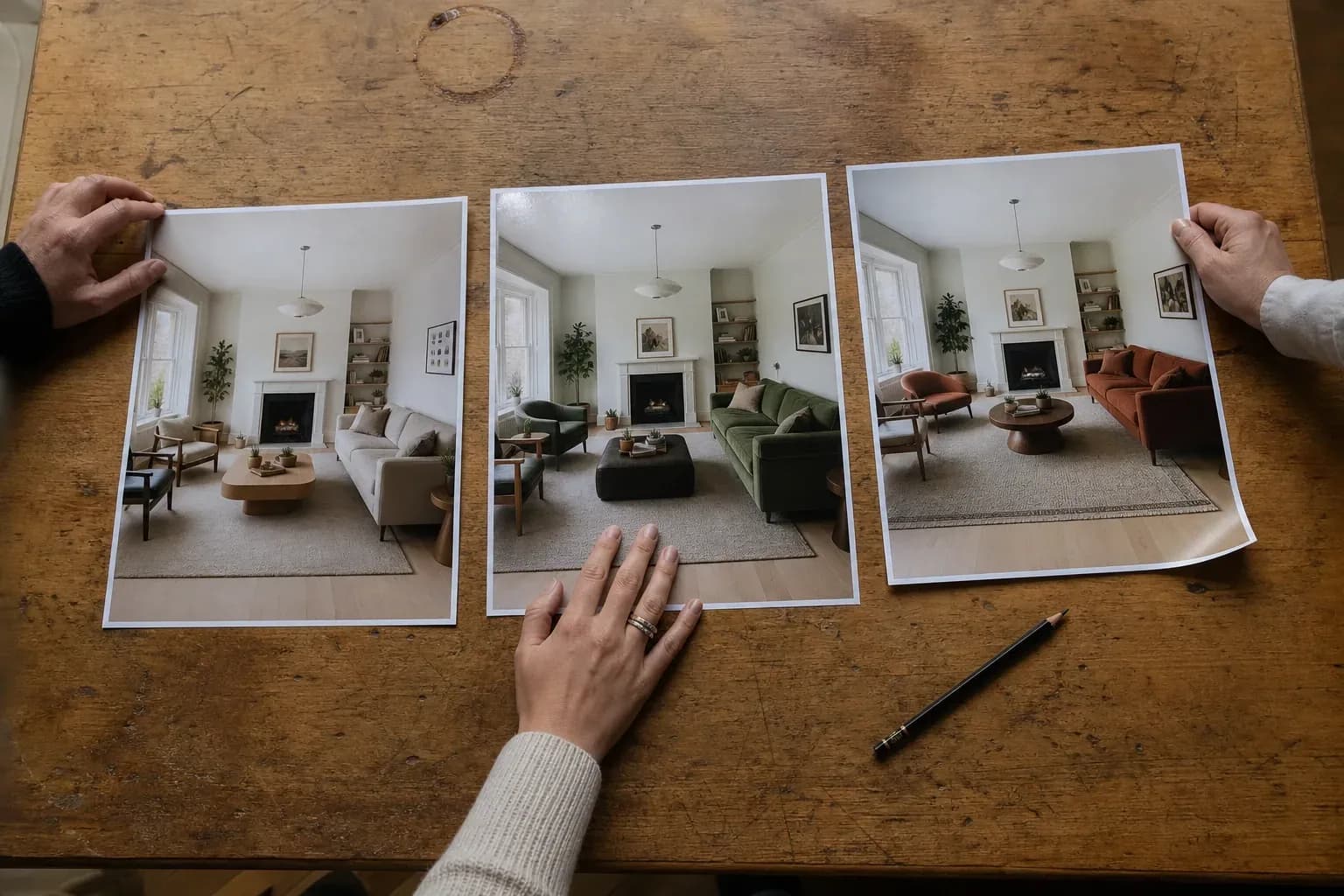
The trap is concluding that revisions should now be unlimited. You price the deliverable rather than the method, and a client buying judgement, specification and responsibility is not owed a discount because one input got cheaper. And the constraint has moved rather than vanished. Your afternoon is no longer scarce. The client's ability to decide still is.
Fifteen options do not produce fifteen times the clarity. They produce a client who loved option four until they saw option eleven. A working rule, and it is a working rule rather than a studied finding: generate widely, present three. The direction you recommend, a defensible alternative, and one that tests a specific question. Keep the round structure. Change what a round contains.
Two habits stop cheap iteration becoming its own mess. Work surgically, because targeted edits instead of full re-renders leave the approved parts of an image untouched, which is what Inpaint Edit does: brush a region, describe the change, and nothing outside the brush is regenerated. And keep a prompt log that makes a look reproducible, because the worst version of cheap iteration is being unable to get back to the image the client liked in round one.
What AI rendering gets wrong, and why your contract should say so
A contract written around AI-assisted visuals has to account for the visuals being wrong in ways a hand-built render usually is not. Nobody selling these tools says so, which makes it worth quoting someone with no reason to flatter them. Chaos, which makes V-Ray and Enscape, published a plain assessment: AI tools can miss practical constraints such as accurate measurements, functional layouts, budgets, available materials, or building and safety requirements. They can misjudge space, distance and ergonomics, and produce proportions so unrealistic the design would be impossible to build.
AI tools do not have the ability or skillset to replace professionals.
Chaos, maker of V-Ray and Enscape, AI tools for interior design

Hands-on testing finds the same thing image by image. In a working designer's side-by-side review of AI interior tools, one product completely changed the orientation of the room while returning a convincing photograph, another added windows and doors that were not there, and bedding came out badly across several tools. The realistic-looking failure is the dangerous one, because it reaches the client.
- Geometry drift: a window, door or wall that is not in the room you photographed.
- Orientation and layout changes that survive review because the image still looks plausible.
- Clearances that fail in reality, from circulation space to door swings to seat heights.
- Materials and assemblies that cannot be sourced or built as depicted.
- Drift between angles: image generators typically produce each view independently rather than from a persistent model of the room, so a second view is a fresh guess rather than a second camera position.
- Soft furnishings, bedding above all, rendered in a way no specifier would sign off.
The consequence is a rule rather than a clause: no render leaves the studio without a designer checking it against the survey, the plan and the specification. Chaos recommends the same, that AI output be reviewed by an expert before it becomes client-facing. That review also decides who pays. A render that contradicts a dimension the client supplied is your correction while it is still in the studio. Caught after presentation, the same error arrives as a comment, and the client has only so many of those.
The AI clauses your agreement is probably missing
Three questions arrive with AI-assisted deliverables, and standard design agreements were written before any of them existed.
Who owns the render
Start with the uncomfortable part: nobody can tell you cleanly. Copyright in machine-generated material is unsettled, actively moving, and answered differently in different jurisdictions. The parts of the work you can point to as yours sit alongside parts you cannot: the photograph you started from, your selection, your edits and your specification are your contribution, and what the model produced on its own is the part nobody should be making promises about.
So a clause assigning copyright in every visual to the client may be assigning something you do not hold. Contract about use instead of ownership. State what the client may do with the visuals, state what you keep, and warrant nothing about copyright in machine-generated elements.
Licence and portfolio. The Designer grants the Client a non-exclusive licence to use the visual materials produced under this agreement for the purposes of this project. The Designer retains the right to reproduce those materials in portfolio, awards submissions and marketing from practical completion, and makes no warranty as to copyright subsisting in any machine-generated element of them.
Then check your tool's terms, which set the ceiling on anything you can grant onward. On Axisnook, Starter and Pro carry a commercial-use licence and export without a watermark; free-tier exports are watermarked.

Telling the client you used AI
No standard design contract obliges you to disclose that a visual was AI-assisted, and practitioners disagree about it. The case for silence is that clients buy an outcome and never ask which renderer you used. The case for disclosure is that they will work it out eventually, and finding out later reads as concealment.
The workable middle is one clause and one sentence. In the contract: the Designer may use digital imaging tools, including AI-assisted tools, to produce visual materials, which are illustrative of design intent. In the room, with the image on screen: this is a visualisation from a photograph of your room, here is what is specified in it and here is what is indicative. An adjacent profession is further down the same road. In NAR's 2025 REALTORS Technology Survey, 46% of agents reported using AI-generated content, while only 17% said AI had made a significant positive difference to their work overall. Use is becoming ordinary faster than results are.
That a render is not a promise
The last clause protects you once the room is built. Renders set expectations the finished space has to meet, and material availability, site conditions and light all move between image and installation.
Visualisations. Renders, mood boards and other visual materials are indicative representations of design intent. They are not construction documents, and they are not a warranty of finished dimensions, colour, material availability or the appearance of the completed installation. Colours and finishes will vary from any screen or printed representation.
Common questions
- Is two revisions standard in an interior design contract?
- No professional body sets a number, so how many revisions to include in an interior design contract is your decision rather than a rule you inherit. Two rounds at concept and one at specification is a defensible default, and it traces back to what visualisation used to cost. Set yours from your own decision points: one round per stage where the client is genuinely choosing something.
- What do I say when a client asks for one more small change?
- Classify it in writing the same day. If it sits inside the approved direction and the round is open, do it and say it was inside the round. If it replaces an approved decision, reply with a version of: that is a change of direction rather than a revision, so let me price it and confirm the effect on the programme before I start.
- Can I put AI-assisted renders in my portfolio?
- That depends on two documents: your tool's terms and your client contract. Axisnook's Starter and Pro plans include a commercial-use licence, while free-tier exports carry a watermark. The contract settles the client side, so include an explicit portfolio right and say when you may publish.
- Do I have to tell the client I used AI?
- In design work there is usually no legal requirement, though this is not legal advice and positions vary. The practical answer is a short clause permitting AI-assisted imaging plus a sentence in the presentation. It changes if the image will be used to market a property, where MLS rules and, in California, statute require disclosure of altered listing images.

Written by
Axisnook Editorial Team
Design visualization writers at Axisnook
The team that builds and supports Axisnook, writing from the render queue rather than the press release.
- Interior and exterior design visualization
- AI render workflows and prompt design
- Client presentation and revision process
- Real-estate listing and virtual-staging disclosure