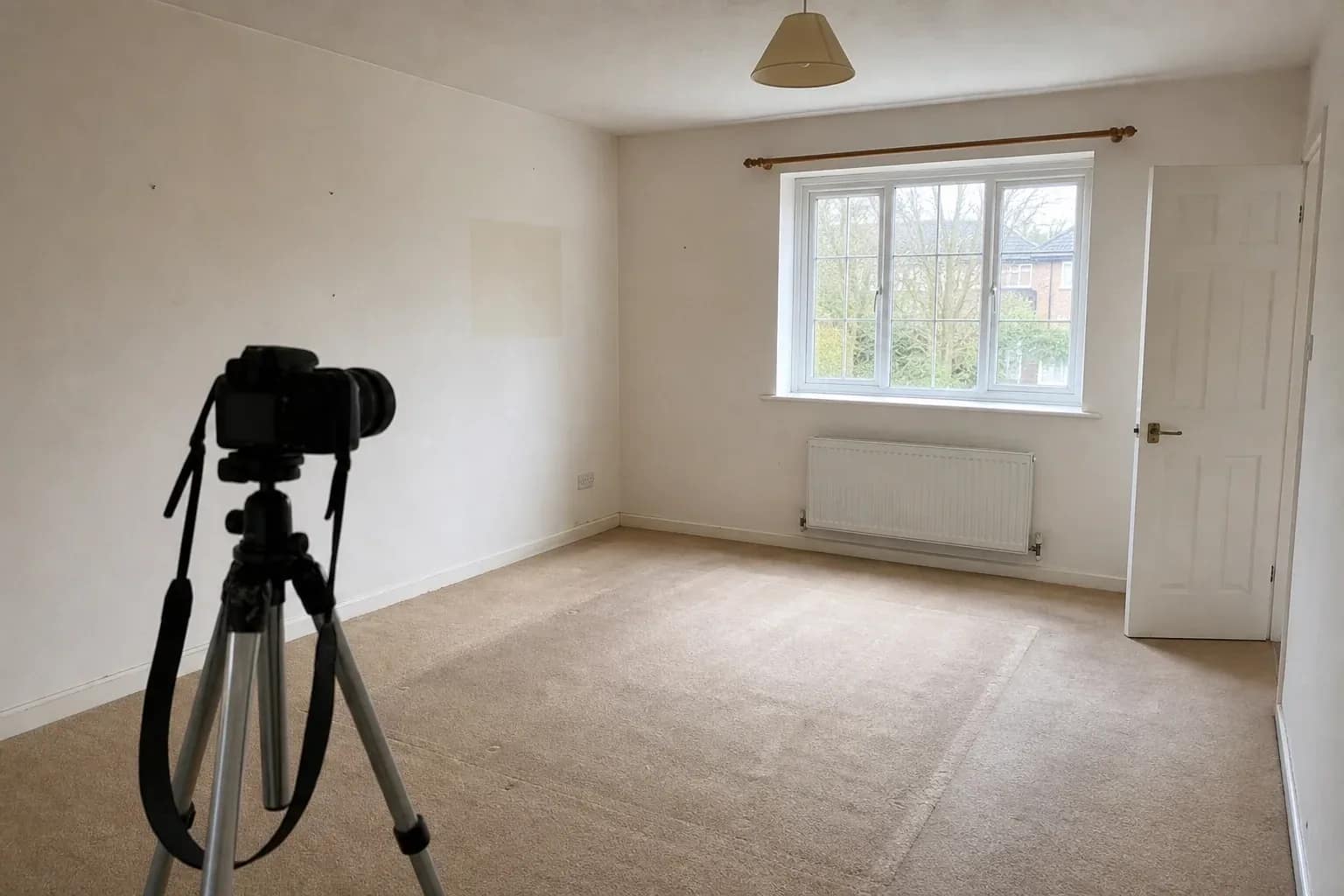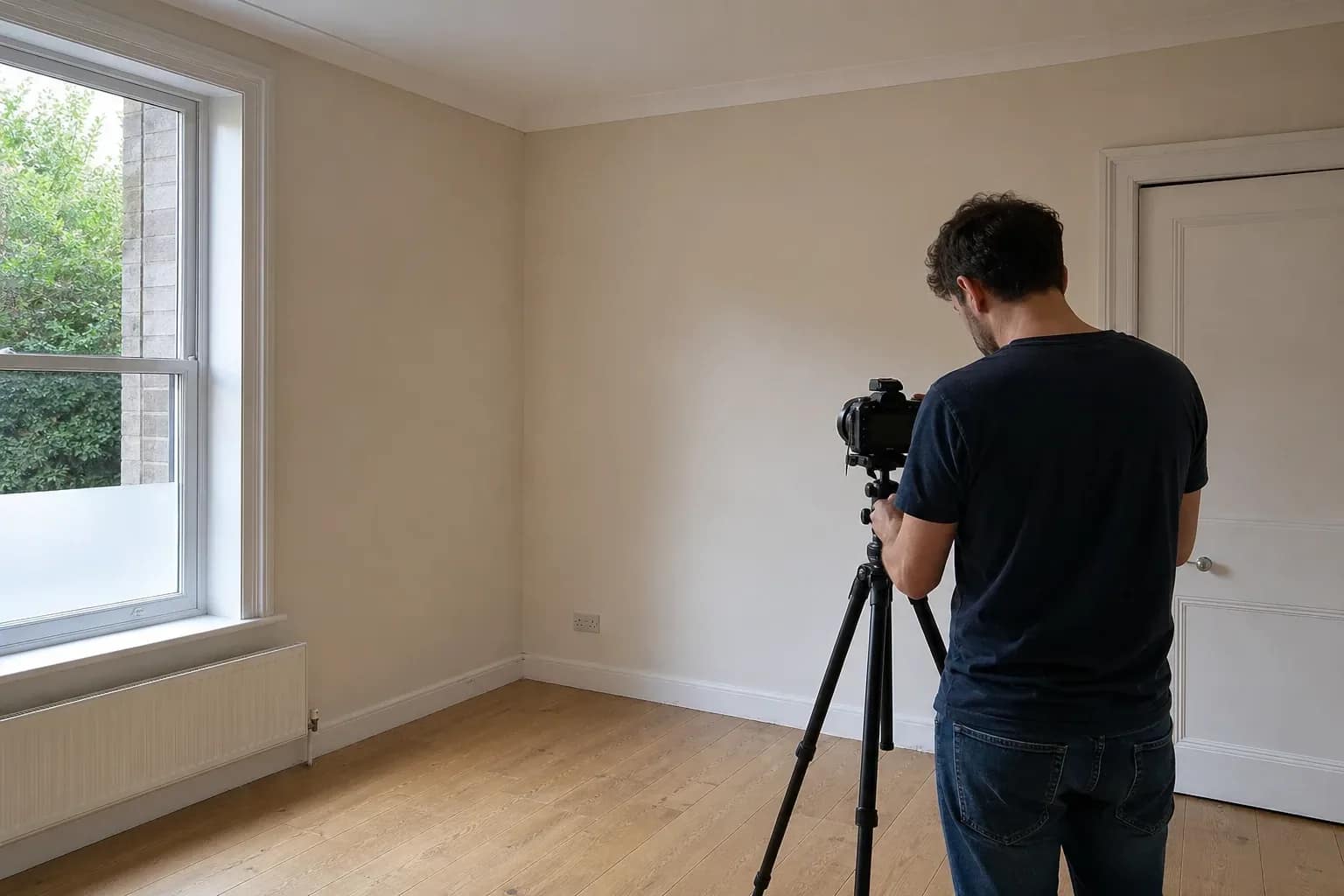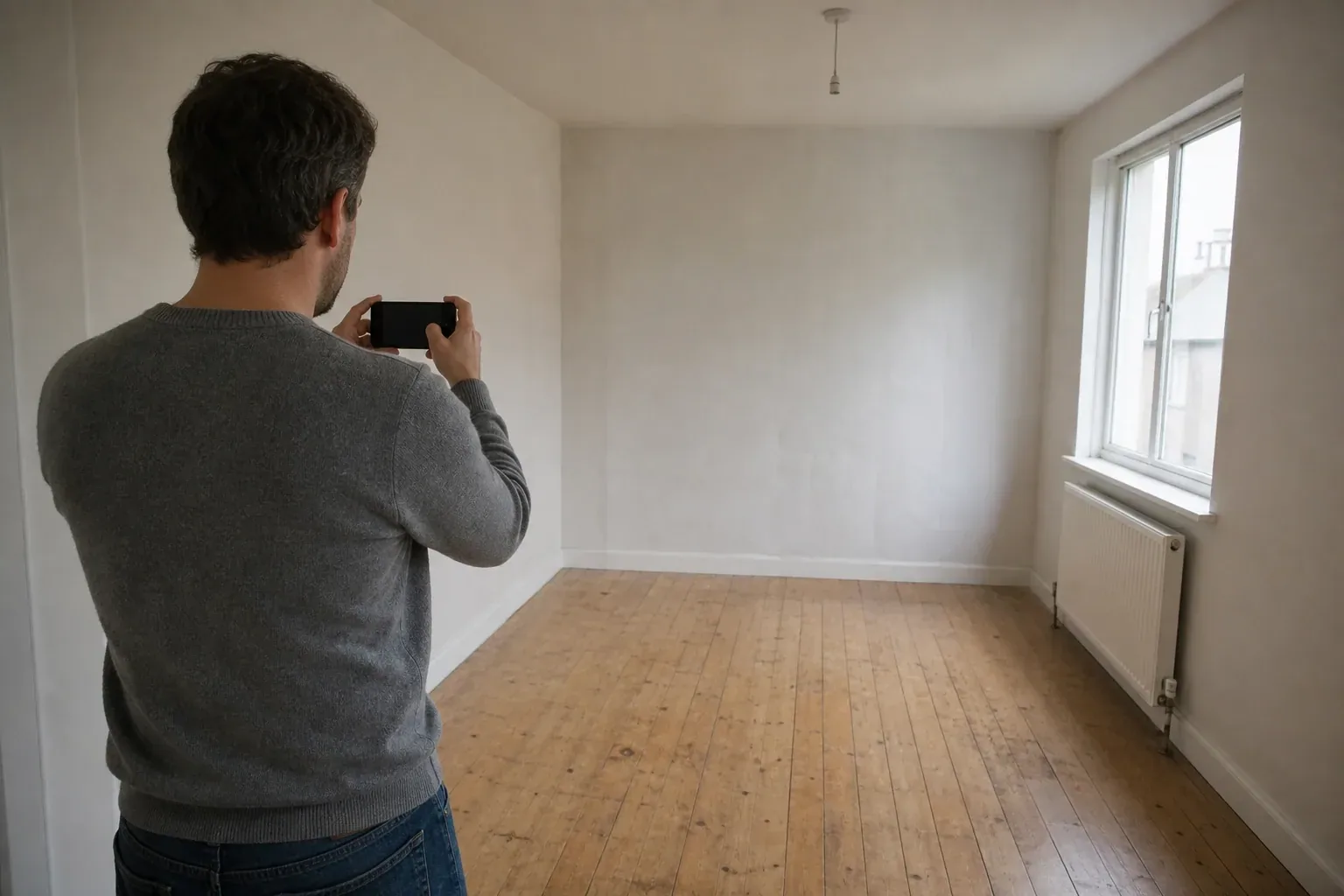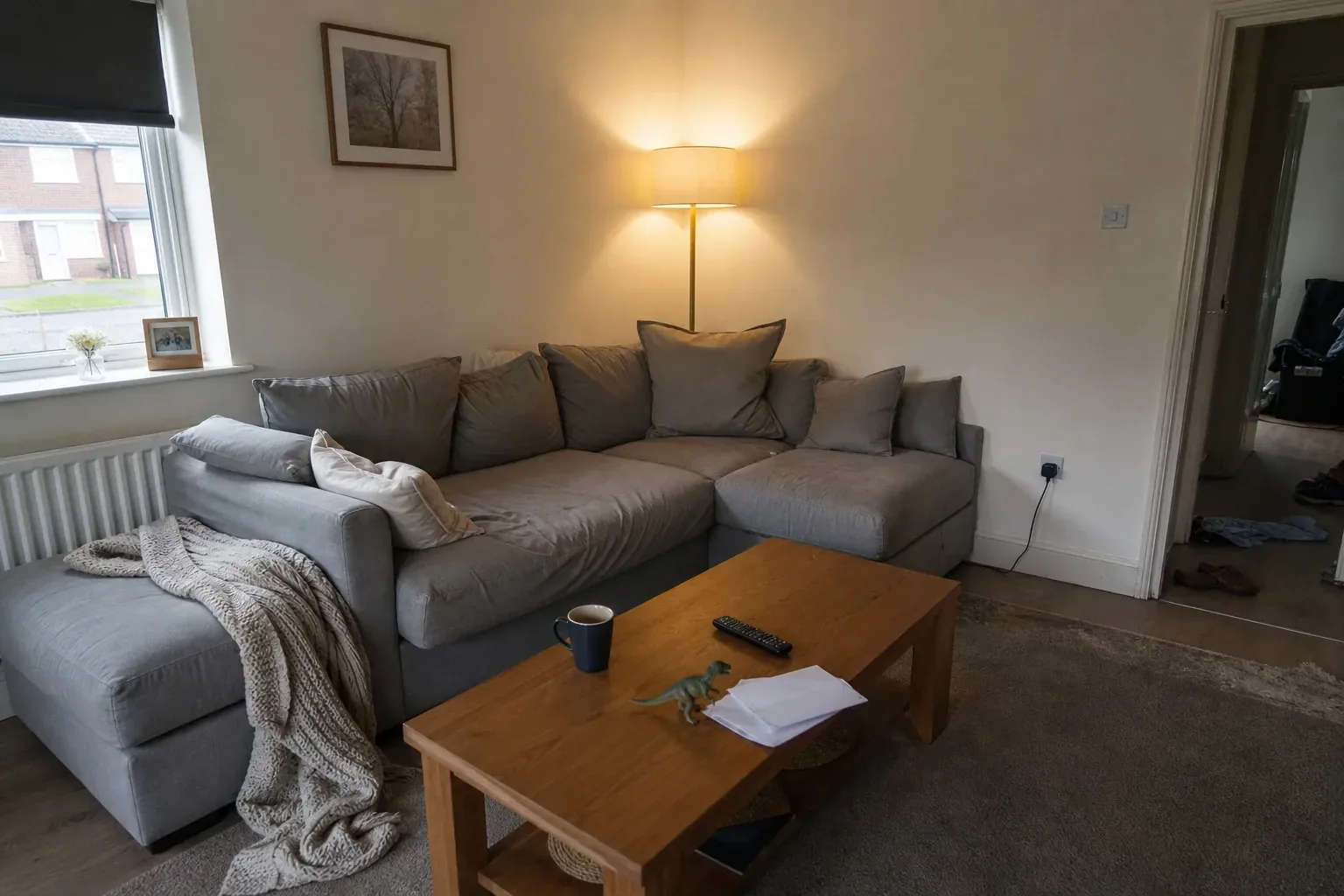
The seller is not moving out before the photos. There is a sectional eating half the living room, a highchair in the dining room, and a wall of family photographs in the hall. You can shoot it as it stands, or produce a second, altered set that a buyer will still recognize at the viewing.
Why staging on top of the furniture almost never works
The instinct is one pass. Here is the photo, make it Scandinavian. On a vacant room that works. On an occupied room it fails in a specific way.
A model asked to restyle a photograph does not add furniture, it rebuilds the picture. The old sofa is not deleted, it is negotiated with, and it shows: a silhouette bleeding through the new sectional, a table with a fifth leg, a shadow cast by something no longer there. New pieces land where the old ones stood, so the crowding returns in different upholstery.
Designers testing these tools report worse. One hands-on review found a tool that “completely changed the orientation of the room” and another that added “extra windows or doors” (Spaces by Dee). Chaos, which makes V-Ray and Enscape, says these tools “can misjudge space, distance, and ergonomics” (Chaos).
The second problem ends the argument. A full restyle rebuilds everything in the frame, not only the furniture: wall color shifts, floorboards change direction, cabinet fronts come back warmer. Most listing rules forbid exactly that. CRMLS states members “CANNOT add, remove, or modify any real part of a property such as wall color, flooring, cabinets, wall dimensions, landscaping, etc.” (CRMLS).
Two passes solve both. Pass one removes furniture, which is personal property and not part of the sale. Pass two puts furniture into an empty frame. Neither touches paint, floor or cabinetry.
Two passes on one frame
Every practical question about how to virtually stage an occupied home comes down to two passes over one photograph. The judgment is in what you take out.
Shoot once, keep the original
The unaltered file is a compliance asset, not a backup. CRMLS requires it immediately before or after the altered image; California requires a public link or QR code to it.
Remove before you restyle
Run the frame through Furniture Cleanup. Object mode paints over the pieces you name and leaves the rest as shot. Full-empty clears the room in one pass.
Inspect at 100 percent
Floor seams, baseboards, door casings, window frames, every reflective surface. Staging on top of a bad removal buries the error under a sofa, where a buyer's agent finds it and you do not.
Stage the empty frame
Interior Redesign runs on the cleaned image. Standard mode suits a plain room with even light; advanced realism earns its credit where light is mixed or the floor has strong grain. Hold one style across the house.
Or swap one piece instead
Where the furniture is broadly fine and one item kills the shot, Furniture Swap replaces a single piece from a reference image. Nothing outside it is regenerated, which makes it the safest edit on an occupied listing.
Label, pair and file
A label that reads at thumbnail size, the same wording in the photo description field, the original beside it, plus any MLS checkbox.
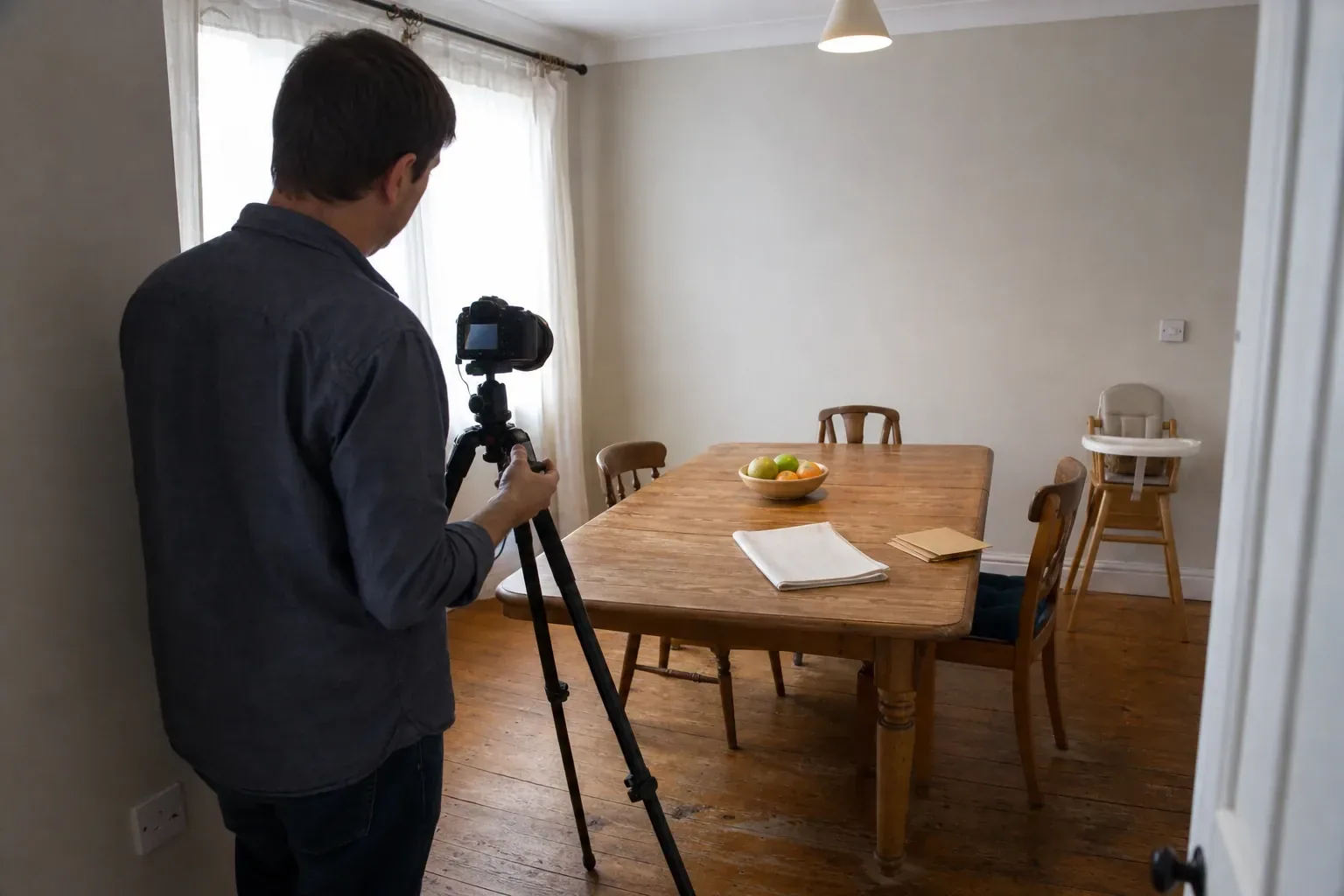
Object mode, or empty the whole room?
Both modes live in the same studio and fail in different places. The choice is not how much furniture is in the room, but how much of the room the model has to invent.
Full-empty asks for every square foot of floor that furniture is standing on. A bedroom with plain carpet, a bed and two nightstands is a small ask. A living room where furniture covers most of a herringbone floor asks for a repeating pattern the model can only guess at, and the guess will not line up at the edges.
Object mode is right whenever the room contains something the model would rewrite if given license. Built-in millwork is the classic case: it reads a bookcase in an alcove as the furniture a bookcase usually is, and deletes it. A built-in that disappears is not a styling error, it is a change to what the buyer is buying.
- Plain, boxy room, one flooring material, nothing built in → full-empty.
- Millwork, paneling, a fireplace surround, a bay, a sightline into another room → object mode, tight masks.
- Busy floor, or a rug nobody can lift → object mode, and roll the rug out before you shoot if anyone can.
- One offending item in an otherwise decent room → neither. Swap it.
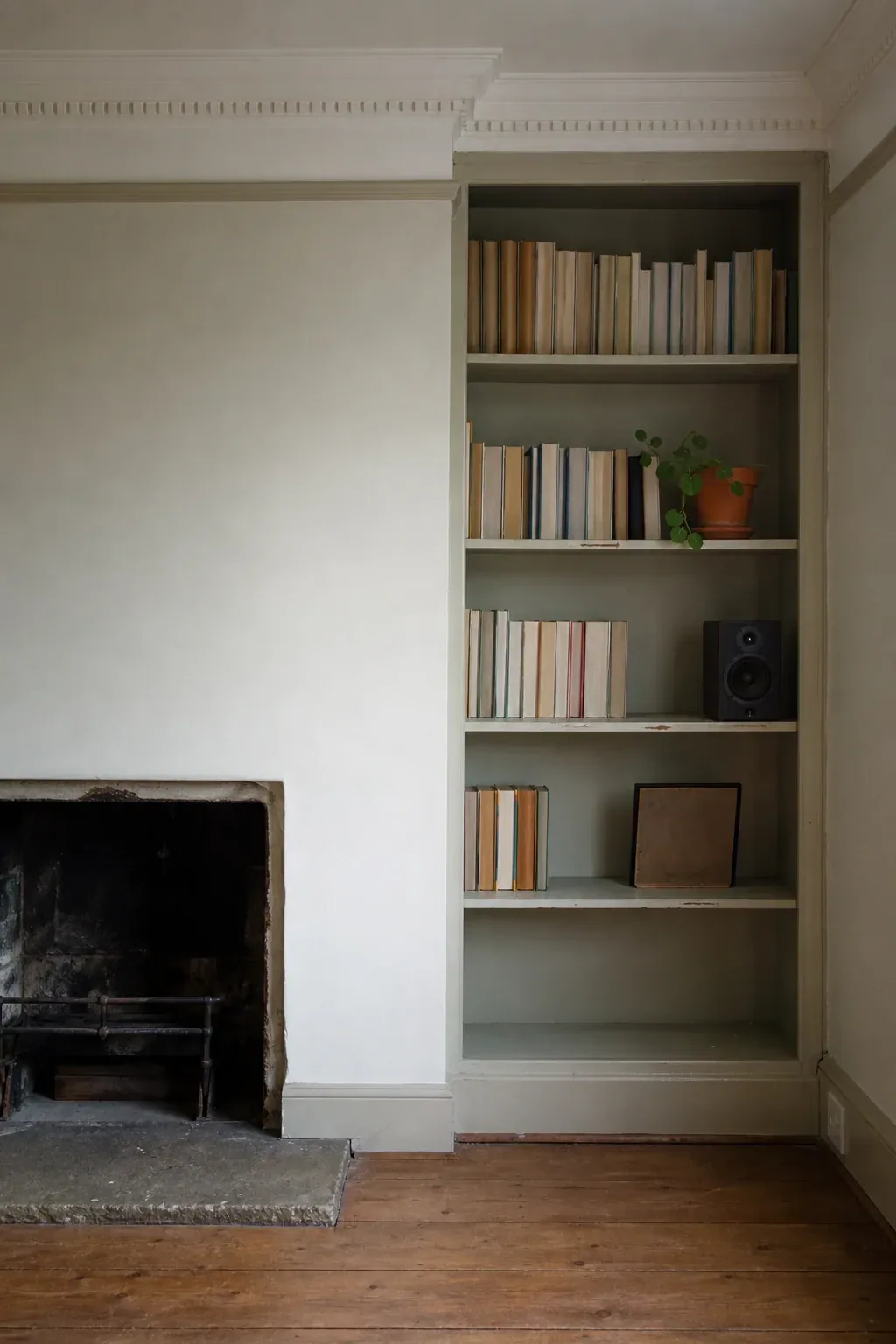
What you may remove, what you must leave
The line is not aesthetic. It is whether the thing in the frame is part of what the buyer is purchasing.
Metro MLS in Wisconsin has one of the clearer lists: furniture, décor, rugs and artwork are permitted; adding people or pets, lifestyle scenes and signage are not (Metro MLS). CRMLS accepts the labels “digitally enhanced,” “digitally altered,” or “virtually staged,” and enforces with a warning then a $250 fine. California went further on January 1, 2026: section 10140.8 requires a disclosure plus “a link to a publicly accessible internet website, URL, or QR code” showing the unaltered version (AB 723). Read Stellar MLS's photo rules for Florida rather than any summary, including this one. Rules vary by MLS and by state, none of this is legal advice, and your own rulebook governs.
Above it sits NAR's Article 12, requiring members to “present a true picture in their advertising, marketing, and other representations,” with Standard of Practice 12-10 prohibiting “use of misleading images” (2026 Code of Ethics). One correction, because published advice often gets it wrong: there is no NAR case interpretation on photo manipulation and no NAR-mandated watermark format. The Code sets the standard, your MLS sets the mechanics. See what the rules say you may and may not remove.
Everything in an occupied frame, and the call to make on it
| In the frame | Call | Reason |
|---|---|---|
| Sofas, chairs, beds, tables, lamps, rugs | Remove, then restage | The permitted category |
| Laundry, boxes, toys, countertop clutter | Remove, physically first | Still an alteration, still disclosed |
| Photographs, mail, certificates, medication | Remove, seller told first | Occupant privacy |
| Religious and cultural objects | Ask the seller, in writing | Not your judgment about who buys |
| Pet beds, crates, bowls, trays, gates | Remove | Not part of the sale |
| The pets or the family themselves | Out of frame before you shoot | Adding people and pets is banned |
| Wall-mounted television | Remove screen, ask about the bracket | The bracket may be a fixture |
| Curtains, blinds, rods, tracks | Leave unless the seller confirms otherwise | Commonly fixtures, and buyers price them |
| Ceiling fans, pendants, wall lights | Leave | Fixtures |
| Built-in shelving, millwork, fireplaces | Leave | Real parts of the property |
| Wall color, flooring, cabinets, wall dimensions | Leave | CRMLS bans modifying these |
| Grab bars, ramps, stair lifts | Leave | Features some buyers search for |
| Cracks, water stains, worn carpet | Leave | The condition is what the buyer buys |
| Freestanding fridge, washer, dryer | Ask what conveys | Either direction misstates the sale |
The bottom rows are where people get into trouble while trying to be helpful. A mask drawn generously around a sofa takes a section of baseboard with it. A cleanup pass in a bathroom erases a grab bar. Grab bars, ramps, stair lifts and widened doorways are not clutter: they are features a subset of buyers is actively searching for. Neither edit is malicious, both are misrepresentation.
Personal effects, family photographs and faith
The privacy argument, which is straightforward
An occupied listing is somebody's home, and the photographs will sit on four major portals and syndicate to dozens more. Look at what is in the frame: children's faces in picture frames, a school schedule on the fridge, opened mail, a prescription label, an alarm keypad, keys on a hook. None of it is the property, and all of it comes out. If the home is tenant-occupied, the tenant never signed the listing agreement.
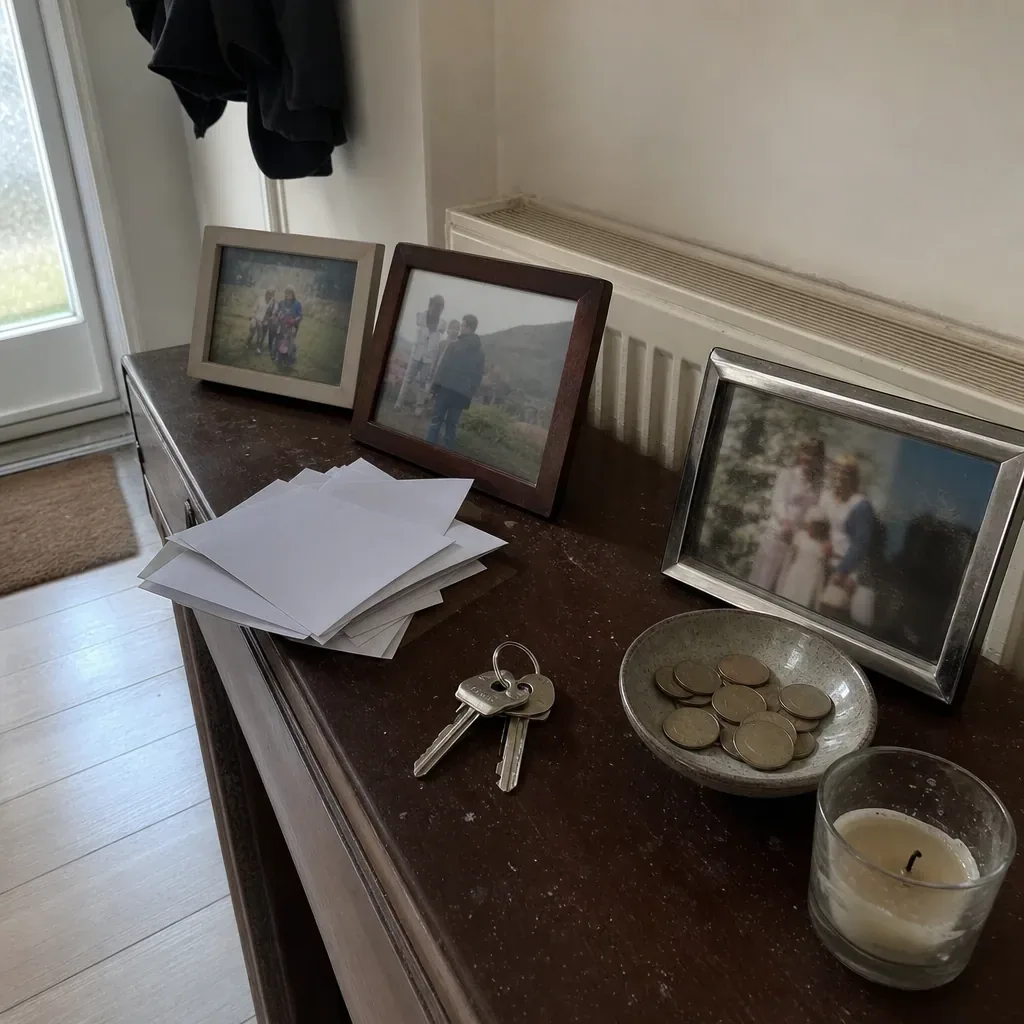
The fair-housing argument, which is not
Federal fair-housing law makes it unlawful to publish advertising for the sale or rental of a dwelling that indicates a preference or limitation based on a protected characteristic, race, religion, disability and familial status among them. Listing photographs are part of the advertisement. That much is settled.
What is not settled is whether a mezuzah on a door frame or a nursery full of baby equipment indicates a preference in the sense the statute means. None of the MLS guidance reviewed here addresses religious objects, and anyone telling you the law requires removal is stating more than the rulebooks do.
Most brokerages land on neutrality. But notice what the decision actually is: erasing someone's religious objects from photographs of their own home is a judgment about who the buyer is likely to be, and not one a photographer makes alone. Ask, name the items, take the answer in writing, and follow it.
The seller conversation, and the permission you need in writing
Get this in writing before the shoot. If a complaint reaches your MLS, someone will ask who authorized what. An email does the job: the address and rooms, what is being removed, what is being added and where, a statement that nothing permanent changes and no damage is hidden, and one question back.
The second half of the conversation is expectation setting, and it is worth more than the permission. Tell the seller what a buyer experiences: a staged photograph on a phone, then the actual room three days later. Florida Realtors calls that gap housefishing, and quotes stager Krisztina Bell: “Buyers should know when images are digitally altered” (Florida Realtors).
The photos made the home look brand new, only to get there and see the usual wear and tear.
DeAnn Wiley, Detroit renter, quoted in Slate
The scale is real. A study of 40,000 primary listing photographs across the four major portals found evidence of alteration in around 11 percent, and more than 90 percent carried no visible disclosure (Real Estate News). This is a second pass over every frame and real billable work, so settle scope and price in the same message: here is what to charge for the extra pass.
Shoot day when the family and the pets are at home
- Walk the house with the seller first. Ten minutes, list in hand. Agree what leaves physically and what gets removed digitally before the tripod comes out.
- Physical removal beats digital. A laundry basket carried to the garage takes twenty seconds. Removed digitally it costs a credit, an invented patch of floor and an inspection at full zoom.
- Park the family in one room. A bedroom, the garage, or the car. Shoot everything else, then move everyone into a finished room and shoot the holding room last.
- Pets go out of frame in person, not in software. Crates, beds, bowls, trays, gates and the leash on the hook come out too, along with the pet hair on the sofa arm.
- Shoot every room, including the ones you will not alter. Consistency makes the staged frames look normal rather than conspicuous.
- Keep a shot log. One line per frame: what left physically, what you intend to remove digitally, what the seller flagged. That is your disclosure record.
Most of the difficulty is decided at the camera rather than in the edit, because more floor in view means more floor to invent. How to shoot it so the cleanup is clean covers the settings and the corner position.
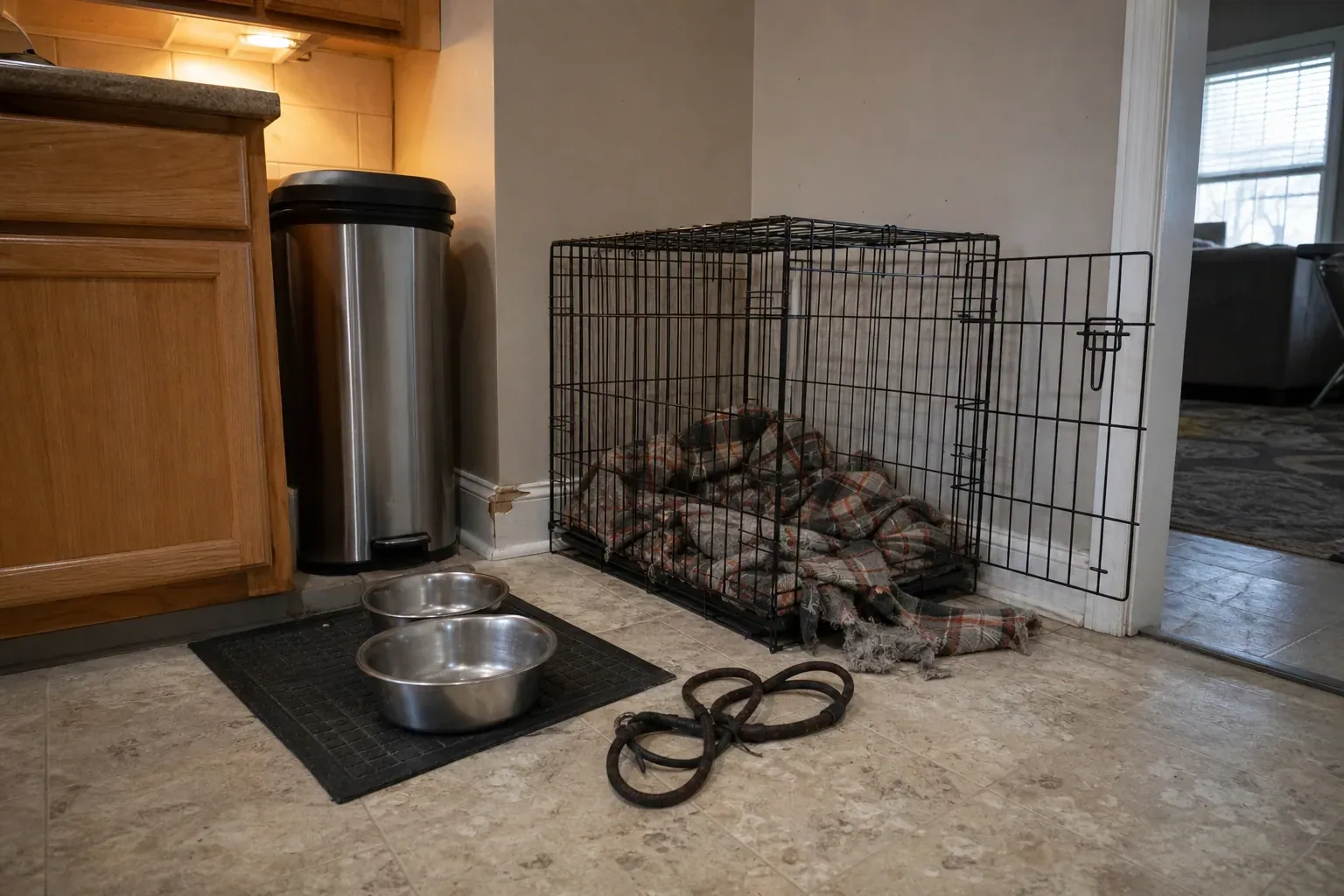
Rooms that are not worth staging
Every altered frame is a disclosure obligation, a credit, and something that can be argued about later. Some rooms are not worth any of it.
- Bathrooms. Nothing to stage. Take the toothbrushes and the bath mat out physically and shoot the fixtures as they are.
- Laundry, garage, storage, mechanical rooms. Buyers want the space and the water heater, not a styled bench.
- Rooms where the seller's furniture is genuinely good. Shooting as-is costs nothing and creates no disclosure obligation.
- Rooms whose whole story is size. Drop a staged queen bed into a room that fits a twin and you have started an argument you will lose.
- Attic conversions, dormers, split levels. The model fights the ceiling line and usually wins in the wrong direction.
- Rooms whose real problem is condition. Staging does not fix a moisture problem, and hiding it is not on the table.
Where this breaks, and what to do about it
Hardly anyone in this category publishes a failure, which is odd, because everyone who works out how to virtually stage an occupied home hits the same six.
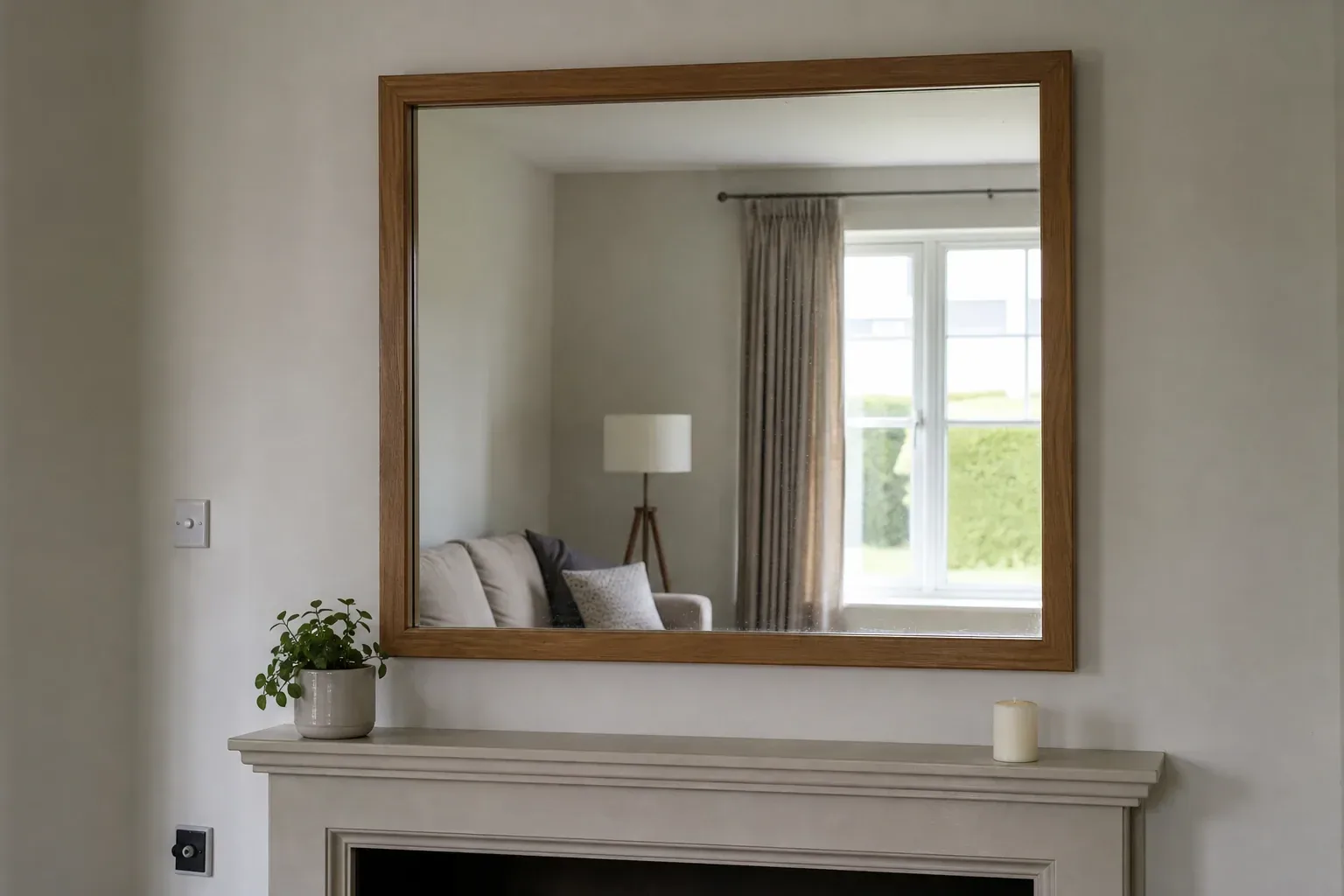
- Mirrors and every other reflective surface. Remove the sofa and the mirror above the fireplace still reflects it. Reflections are not recomputed to agree with the edit, and nor are glass cabinet doors, dark television screens or stainless appliance fronts. If the reflection disagrees with the room, that frame is dead.
- Built-ins read as furniture. Alcove shelving, window seats, built-in closets and mudroom benches get removed or reshaped in a full-empty pass.
- Patterned rugs and the floor beneath them. Whatever is under the rug is invented. Pattern bleeds into the replacement floor, plank direction changes mid-room, and a faint band survives at the rug edge.
- Glass and transparency. A glass coffee table half disappears, or the floor pattern fails to continue through it.
- Shadows and contact points. The object leaves and its shadow stays, or new furniture floats an inch off the floor with no shadow at all.
- Scale. The model has no measurements. It will fit a seven-seat sectional into a room that holds a two-seater, and the picture stays plausible until someone stands in it.
One more is cumulative rather than visible in any single frame: each pass re-encodes the image, so a file that went through cleanup, staging, a fix and an upscale is visibly softer than one that went through two.
The New York Department of State told buyers in November 2025 to look for “distorted or inconsistent details. For example, watermarks, blurry backgrounds, or inconsistent window views,” and reminded them that “Real homes always have small imperfections” (NY DOS). Read that as a free quality-control checklist.
Common questions
- If I only removed furniture and added nothing, do I still have to disclose?
- Yes. CRMLS defines a digitally altered image as one changed “to add, remove, replace, or modify visual design elements such as furniture, appliances or decor,” and California's AB 723 lists removal explicitly. Decluttering is alteration.
- The seller wants the water stain on the ceiling taken out. What do I say?
- No, and have the reason ready rather than just the refusal. Damage is a real part of the property, CRMLS bans modifying real parts, and NAR's Article 12 requires a true picture.
- Can I stage the room with furniture that looks like the seller's own?
- You can put a similar piece back, but watch what the image implies: personal property that is not in the contract should not appear to convey.
- How many render passes does an occupied room take?
- Budget three: a cleanup pass, a staging pass, and a re-roll of whichever came back wrong. That is arithmetic rather than a measured average, and busy floors run higher. Credit cost per render varies by studio and mode, so price a house off the current figures on pricing. Starter includes 30 credits a month, and unused credits roll over while you stay subscribed.
- Can I add a person or a pet to make the room feel lived-in?
- No. Metro MLS lists “Add people or pets,” “Include lifestyle scenes (e.g., families dining, children playing)” and “Insert digitally added human figures” as prohibited, and it is not alone.

Written by
Axisnook Editorial Team
Design visualization writers at Axisnook
The team that builds and supports Axisnook, writing from the render queue rather than the press release.
- Interior and exterior design visualization
- AI render workflows and prompt design
- Client presentation and revision process
- Real-estate listing and virtual-staging disclosure